

Slow decorating is the habit of furnishing and styling a home gradually: you live in a room first, work out what it needs, and add pieces you will keep rather than filling it quickly with whatever is in fashion. Ideal Home describes it as getting to know your space and your own style, then letting the room evolve as you use it. This guide shows you how to start, how to shop with less impulse, how to bring the idea into Christmas, and how to keep decorations safe around children.
TL;DR
- Slow decorating means observing a room before changing it, then adding meaningful pieces over time instead of buying trends in one go.
- Write down what you think you need, wait 30 days, then revisit the list before you buy.
- Invest first in the big, hard-to-change elements, then layer smaller decorative pieces gradually.
- A slow Christmas reuses what you own and adds one or two handmade, natural pieces a year.
- Anything within a child’s reach needs checking for small parts, batteries and finishes.
Table of Contents
- What slow decorating actually means
- Start by living in the room
- Buying with intention, not impulse
- Making it sustainable and personal
- Our view: why a handmade tree belongs in a slow home
- A slow Christmas: fewer boxes, more meaning
- Slow decorating with children in the house
- What makes a handmade decoration worth collecting or giving
- Where to begin with The Arboretum
- A simple slow decorating plan for the next three months
- FAQ
- Sources
What slow decorating actually means
The phrase borrows from the slow food and slow fashion movements. The principle is the same: fewer, better choices, made with attention. Instead of treating a room as a project with a finish date, you treat it as something that grows alongside the people who live in it.
Good Housekeeping describes it as curating a home over time around intentional decisions, meaningful pieces, craftsmanship and long-term satisfaction, as opposed to instant, trend-driven purchases. The same piece reports designers seeing it as a reaction to social media, where rooms are expected to transform overnight and look different every season.
It is not about doing nothing. House & Garden’s advice is to keep what works, add only when needed and refine ideas before committing to structural changes. It also makes clear that slowness does not mean tolerating a room that does not function: if something in a kitchen or bathroom is not fit for purpose, deal with it straight away.
Slow decorating versus following trends
| Trend-led decorating | Slow decorating | |
|---|---|---|
| Starting point | What is popular now | How you actually use the room |
| Pace | A room finished in a weekend | Pieces added over months or years |
| Buying | Impulse, often online | Wish list, pause, then decide |
| Lifespan | Replaced when the trend moves | Chosen to stay, repaired or rotated |
| Result | A look | A home with a story |
Start by living in the room
The most repeated advice from designers is to observe before you act. Ideal Home’s contributors suggest watching a room for a few weeks before changing anything, because your routines reveal what is missing and what does not work. Homes To Love reports designers advising you to live in a new space for several weeks, notice the light and how you move through it, and decide the mood you want before choosing an aesthetic.
A practical way to do this:
- Note the light. Look at the room in the morning, at midday and in the evening. A corner that glows at 8am may be gloomy by 4pm in winter.
- Track where you sit, drop things and linger. Those are the places that need storage, a lamp or a surface.
- Choose a feeling first. Calm, warm, playful, grounded. Mood is harder to change later than a cushion or a picture.
- Gather influences. The same designers point to nature, travel, art, fashion and materials as sources of ideas that feel personal rather than copied.
- Keep a list. Write down what you think you need, and do not buy yet.
Buying with intention, not impulse
Ideal Home’s suggestion is to review that list after 30 days. Many items will fall away. The ones that stay are the ones worth shopping for.
Remove the deadline
A finish date is what makes people buy filler. Without it, you can wait for the right lamp, rug or ornament. Ideal Home also recommends browsing antiques and vintage markets and investing in a few timeless pieces rather than lots of cheap ones.
Spend on the foundations first
Homes To Love’s designers recommend putting money first into colour, materials, lighting, a well-considered sofa and architectural or built-in elements, then adding art and decorative layers gradually. They also suggest quality second-hand real-timber furniture from local charity shops.
Add finishing touches selectively
Once you know how a space is used, small additions land better. A made-to-measure cushion cover in a colour you have been circling for weeks is the sort of decorative cushion cover that earns its place because it answers a gap you noticed, not because it was on sale.
If a room needs updating, choose lower-impact products
When something does need refreshing, the same logic applies. House & Garden’s guide to decorating responsibly says the most sustainable approach is to avoid unnecessary decoration and, where you must decorate, to favour natural materials and paints. It singles out materials as a major opportunity, and highlights cork as renewable, durable and biodegradable because its bark regenerates after harvest.

Making it sustainable and personal
Slow decorating tends to be kinder to both your budget and the planet. Ideal Home says slowing down can save money, reduce waste and produce a calmer, more cohesive home. House & Garden’s designers add a values angle: patience leaves room to choose things made with fair wages, good animal welfare and lower carbon emissions in mind.
Practical habits that follow:
- Keep, repair, re-cover or rotate what you already own before replacing it.
- Donate, swap or recycle what you no longer want rather than binning it.
- Look for meaningful pieces from travel, family, friends, vintage markets or local makers. Homes To Love notes that this layering builds a stronger emotional connection to a home.
- When buying wood, ask about its origin. Our guide to verifying FSC chain of custody explains what UK buyers can check.
- Let imperfection stay. Knots, grain variation and small marks are part of the appeal, a theme we explore in our piece on wabi-sabi decor.
Our view: why a handmade tree belongs in a slow home
We make wooden trees because we think a decoration should be something you notice, keep and talk about, not something you replace next year.
Every piece we craft shows the wood as it grew. Maple, walnut and oak carry knots, grain and colour that no printing process copies, so no two trees are quite the same. For us, that is the whole point of slow decorating: choosing objects with character and a story, rather than filling shelves with generic, mass-produced pieces.
We source our hardwoods sustainably and pack with the environment in mind, because a slow home should not cost the earth. And because we offer single trees, sets and custom designs, you can start with one piece and build a collection over seasons, which is exactly how a layered, personal home comes together.
If you want one object that will still look right in five years, a handmade wooden tree is a good place to begin.
Josh
A slow Christmas: fewer boxes, more meaning
Christmas is where fast decorating is most obvious: new colour schemes every year, bags of plastic baubles, a rush in early December. The slow version keeps the sparkle and drops the churn.
- Reuse first. Pull out the same boxes each year and add only the occasional unique ornament. New Dream’s reader tips for simplifying the holidays suggest handmade ornaments that represent family members, which turns a collection into a family record.
- Work with the colours you have. SheerLuxe’s Christmas guide builds around existing colours and collected decorations, mixing textures and materials, with handmade gingerbread, simple hessian-ribbon bows and greenery such as ivy, holly and spruce.
- Display a few vignettes. A single mantel or windowsill done well beats every surface covered.
- Add one natural piece a year. A wooden tree on a shelf or table works in a neutral scheme and keeps working in January. Our notes on neutral Christmas decor and Scandi-style Christmas decor show how.
- Think beyond December. Pieces that are not overtly festive stay out longer. See our ideas for a seasonless, year-round look.
If you like making things yourself, our boho Christmas ornaments guide covers a gentle DIY route using sustainable wood.
Slow decorating with children in the house
Mindful choices include safe ones. Decorations sit at child height, get picked up and sometimes end up in mouths, so check before you hang or display.
Small parts. The Office for Product Safety and Standards recalled a Christmas tree decoration in December 2024 because detachable small parts posed a choking risk and the product did not meet the General Product Safety Regulations 2005. Look for pieces without loose, snap-off bits.
Button batteries. In January 2023 the same body reported a serious risk from Christmas LED ornaments whose battery compartments were not secured, so batteries could be reached and swallowed, with potential gastrointestinal injury. Keep button batteries out of children’s reach, and if you think a child has swallowed one, seek urgent medical help.
Lights. Electrical Safety First says mains Christmas lights must have a UK three-pin plug and fuse, and that extra-low-voltage lights, typically 12 to 24 volts, are the safest option. It also advises checking for damage, avoiding overloaded sockets, keeping lights away from flammable materials and switching them off and unplugging them before bed or when you go out. For outdoors, use weatherproof products and RCD protection, and never use frayed cables, as set out in its home safety checklist.
We offer child-friendly versions of our Woodland and Forest sets, designed with dull points and food-safe finishes. For more family ideas, read our kid-friendly home decor guide.
What makes a handmade decoration worth collecting or giving
A handmade piece suits slow decorating for three reasons.
- It is individual. Natural wood shows its growth, so each tree differs in grain, colour and knots. You are not choosing a copy of a thousand identical items.
- It has a maker and a story. Homes To Love’s designers point to pieces from local makers as a route to a home with stronger emotional connection. A gift works the same way: the recipient gets something chosen, not just something bought.
- It grows with you. A single tree can become a set, and a set a collection. That slow build is the point, and it makes a good gift because the giver can add a piece each year.
For gifting, think about the person’s room and palette first. Natural wood suits most schemes, from warm and rustic to pale Scandi. Our guide to wooden decor trends and nature-inspired home ideas can help you match a piece to a home.
Where to begin with The Arboretum
If you would like one handmade piece to anchor a slow approach, our trees are made from sustainably sourced maple, walnut and oak, with natural knots and texture left visible. You can start small and build.
- A Custom Single Tree is $28.
- Woodland sets are $126, with Child Friendly, Oak and Droplets variants at the same price and the Ninja Edition at $148.
- Forest sets are $239, including a Child Friendly version.
- The Floating Shelf and Tree Candle are $40 each.
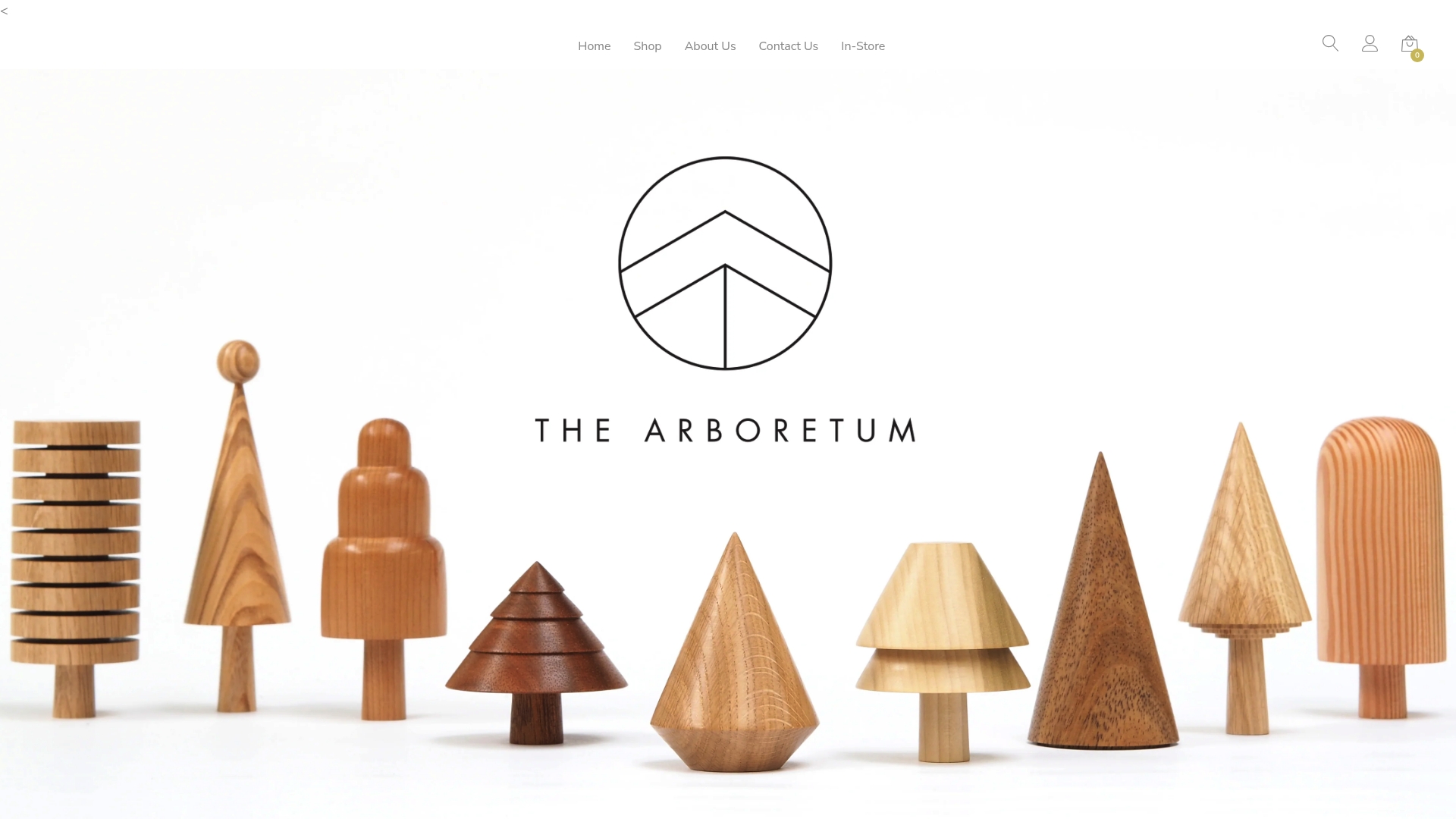
All prices are as published on our site. Browse the full shop when you are ready, and take your time choosing.
A simple slow decorating plan for the next three months
Month one: observe. Do nothing but notice. Write your list of needs, note the light and the mood you want.

Month two: edit. Revisit the list after 30 days. Cross off impulse items. Move furniture and ornaments you already own around, and rehome what you do not use.
Month three: add one thing. Choose a single piece that answers a real gap. It might be a lamp, a shelf or a handmade tree. Live with it for a few weeks before the next purchase.
Repeat. The room will never be finished, and that is the idea.
FAQ
What is slow decorating in simple terms?
It is decorating at the pace you live, not the pace of trends. You observe how you use a room, buy only what it needs, and choose well-made, meaningful pieces. The aim is a home that feels personal, calm and lasting.
How long should I wait before decorating a new home?
Designers quoted by Homes To Love suggest living in a new space for several weeks, and Ideal Home recommends revisiting a needs list after 30 days. Anything that is unsafe or unusable, such as a faulty kitchen or bathroom, should be dealt with straight away.
Is slow decorating more expensive?
Not usually. Ideal Home says slowing down can save money and reduce waste, because you avoid duplicate and impulse buys. You may spend more per item, but you buy fewer of them and keep them longer.
How do I decorate for Christmas slowly?
Reuse your existing decorations, work with colours you already own, and add one or two meaningful pieces a year, such as a handmade ornament or a wooden tree. Display a few considered vignettes rather than covering every surface.
Are wooden decorations safe for children?
It depends on the design. Check for detachable small parts and avoid anything with accessible button batteries. Our child-friendly Woodland and Forest sets are designed with dull points and food-safe finishes.
Sources
- Slow decorating is the best way to style your home in 2026, Ideal Home
- Why we should all be slow decorating, House & Garden
- The dos and don’ts of decorating responsibly, House & Garden
- Pros say slow decorating is taking over in 2026, Good Housekeeping
- Slow decorating: why the best homes are never really finished, Homes To Love
- How I simplify the holidays, New Dream
- Birdie Fortescue’s guide to decorating and hosting at Christmas, SheerLuxe
- Product recall: Stripe Tree Christmas Decoration, GOV.UK
- Product safety report: Christmas LED ornaments, GOV.UK
- Christmas lights, Electrical Safety First
- Electrical safety at home checklist, Electrical Safety First
- Orange decorative cushion cover, Fabmet
Follow Us On Social