

Kid-friendly home decor works when you build the room on durable, wipeable, rounded and well-stored basics, then add personality through pieces you can swap as your children grow. Safety comes first with anything small, sharp, corded or battery-powered. Style comes from natural materials, texture and a few well-chosen handmade objects. This guide covers the base layer, room-by-room ideas, storage, displaying children’s art, and the checks to run before anything goes on a shelf or a tree.
TL;DR
- Start with a calm, neutral base and add colour through art, books and textiles, which are cheap to change when tastes shift.
- Choose wipeable paint, washable rugs, rounded edges and easy-clean flooring, and anchor tall storage so it cannot topple.
- Check every ornament and toy for small detachable parts, long cords, loose magnets and button batteries, especially with under-threes.
- Natural wood, with its knots and grain, adds warmth that survives knocks and scuffs better than fragile trinkets.
- Keep themed decor on a replaceable layer, such as a feature wall or a shelf display, so it can change with your child.
Table of Contents
- Start with a calm base, then layer in personality
- Safety first: what to check before anything goes on display
- Materials that cope with real family life
- Room-by-room ideas
- Storage that keeps the room calm
- Displaying art, collections and keepsakes
- Why handmade and natural wood suit a family home
- Perspective
- Wooden trees designed with families in mind
- A buying checklist for family-friendly decor
- A note for Christmas
- FAQ
- Sources
Start with a calm base, then layer in personality
The most repeated advice from designers who live with children is to avoid committing to a theme in the permanent parts of the room. Ideal Home’s roundup of how interior designers make their homes child-friendly recommends a soft, neutral base with colour layered in through art, books and textiles, so the space can evolve as children grow. Homes & Gardens makes the same point from another angle: invest in timeless, versatile furniture and put personality into replaceable accessories, art, bedding or a feature wall.
In practice that means:
- Walls and big furniture stay simple. Think warm whites, soft greens, oatmeal and natural wood tones.
- Soft furnishings carry the colour. Cushions, throws and bedding are easy to wash and cheap to replace.
- Accessories carry the story. Prints, shelves of favourite objects and handmade pieces are where a child’s interests show up.
This also stops the room feeling like a nursery the moment your child turns six. A dinosaur or pirate phase can be enormous at five and over by seven, which is why Homes & Gardens suggests putting a themed mural on an easily replaceable feature wall rather than all four walls.
If you like to bring nature into a child’s space without a full redesign, flexible retail pieces do the job well. There are good ideas for nature-inspired room decor built around artwork, cushions and textiles, all of which add character without renovation.
Safety first: what to check before anything goes on display
Decor that looks lovely at adult eye level can become a hazard at toddler height. The Child Accident Prevention Trust’s Parents’ Pack advises checking for accessible button batteries, loose magnets, detachable small parts, long cords, exposed stuffing and age warnings. It also advises looking at both the product and your child’s stage of development, because under-threes are particularly vulnerable to choking, battery, magnet and strangulation hazards.
The rules behind children’s toys point the same way. UK toy-safety legislation, set out in the toy safety requirements on legislation.gov.uk, requires toys to minimise risks from edges, protrusions, cords, fastenings, strangulation and choking, and detachable parts in toys for children under 36 months must not be swallowable. Ornaments are not toys, but children treat them as toys, so those are sensible tests to apply to anything within reach.
A quick checklist for any decorative object in a family home:
- Size. Can any piece, or any piece that might snap off, fit in a small mouth?
- Edges and points. Are corners rounded and tips dulled?
- Cords and ribbons. Is anything long enough to wrap around a neck? Shorten or remove it.
- Batteries and magnets. Are battery compartments secured and magnets fixed in place?
- Finish. Is the surface finish suitable for little hands that end up in mouths?
- Position. Is it fixed, low and stable, or high and out of reach?
Lighting needs thought too. Homebuilding recommends adjustable, task and ambient lighting, avoiding floor lamps that can be knocked over, and making sure fixtures meet safety standards.
If you want to go deeper on wooden pieces specifically, our guide to what to check before you buy child-safe wooden decor walks through finishes, edges and sizes.
Materials that cope with real family life
Children dent, scuff, spill and draw on things. The goal is not to prevent that but to choose surfaces that forgive it.
Walls. Ideal Home’s designers favour wipeable paint. Reclaim Magazine recommends child-safe, less-toxic paint and durable, easy-clean wall and flooring finishes for bumps, scrapes and spillages.
Floors. House & Garden suggests durable, easy-to-clean flooring, and notes that rugs or playmats over wood and soft carpet add warmth and reduce noise.
Fabrics. Spill- and stain-resistant performance upholstery and washable rugs are the practical picks, and pattern and texture help hide marks.
Furniture. Hardwood is hardwearing, but Ideal Home recommends balancing durability against affordability, because children can dent and scuff furniture whatever it is made from. Rounded edges are worth looking for on anything at head height.
Natural wood decor sits well in this picture. It is solid, it ages gracefully, and a small mark becomes part of its character rather than a flaw. That is a very different proposition from glossy plastic or fragile glass accessories that look worn the moment they are knocked.
If you are repainting or finishing furniture yourself, our piece on non-toxic wood finishes for UK DIYers explains what to look for on the tin.
Room-by-room ideas
The bedroom
Treat it as a multifunctional space. House & Garden recommends designing children’s rooms with separate opportunities for sleep, play, reading and homework. Homebuilding’s children’s bedroom ideas suggest defining those zones with rugs, decals, a desk, shelves and interactive storage.
A few ways to make each zone work:
- Sleep: keep it calm and uncluttered. Mattresses should be brand new, according to Reclaim Magazine, which also reports that experts generally advise against using a cot more than 10 years old.
- Reading: a corner with a floor cushion, a low shelf with book covers facing out and a dimmable lamp.
- Play: a thick rug and low, open storage so toys are visible and easy to put back.
- Study: a desk with task lighting, separate from the bedside lamp.
For babies and toddlers, we have a separate practical guide to non-toxic nursery decor.
The playroom or shared living space
Architectural Digest’s playroom ideas, from a US publication, recommend murals, colourful art, comfortable seating, low accessible shelving and thick rugs to make playrooms imaginative and welcoming. Those ideas travel well to British homes, where the playroom is often a corner of the living room.

If toys share space with adult furniture, keep the adult look consistent with natural materials and a restrained palette, and let the toys be the colour. Our guide to seasonless home decor ideas shows how to keep a room calm all year round.
Hallways and entrances
A lift-up hall bench for shoes, a low row of hooks and a basket for scarves and gloves keep the busiest part of the house under control. Ideal Home’s designers recommend this kind of hidden storage for the family’s daily clutter.
Storage that keeps the room calm
Storage is decor in a family home. If the clutter has somewhere to go, the pretty things can stay pretty.
Ideal Home’s designers suggest a mix of hidden and accessible storage: an ottoman for changing supplies, a lift-up bench for shoes, and closed storage, open shelves or baskets that children can reach. Other proven ideas:
- Under-bed and cabin-bed storage. Homebuilding reports that cabin beds and under-bed storage can hold clothing, bedding, toys and books while preserving floor space.
- Perimeter storage. Architectural Digest recommends keeping storage around the edge of the room, using baskets, cubbies and under-sofa bins so the central floor stays free for play.
- Built-in cubbies and reading seats. House & Garden says built-in storage and storage beneath reading seats can reduce clutter.
There is one safety rule to keep in mind. House & Garden warns that toddlers may scale and topple freestanding storage or bookshelves, so fix tall units to the wall.
Displaying art, collections and keepsakes
Children love seeing their work and treasures on show. The trick is to make display deliberate, not accidental.
Homes & Gardens suggests combining concealed storage with open shelving, nooks and display areas where children can proudly show their creations. For artwork, Ideal Home’s guide to displaying kids’ artwork without the fridge recommends rotating displays: front-opening frames that store several pictures, plus pinboards and magnetic displays for easy swaps. Organiser Shannon Murphy, quoted there, advises choosing the best pieces, letting children help decide what stays, and following a one-in-one-out rule.
For three-dimensional keepsakes, a floating shelf at an adult’s reach works well for treasured objects, while a lower shelf holds things a child can handle freely. A single hand-finished wooden piece among their own clay models and shells gives the arrangement a sense of intent.

Why handmade and natural wood suit a family home
Mass-produced decor often looks identical from one house to the next. Handmade pieces bring individuality, and sustainable materials bring a quiet story. Reclaim Magazine suggests reusing reclaimed or upcycled pieces that can be repainted or repurposed as children grow, and choosing eco-friendly, child-safe, less-toxic paints. Homebuilding likewise recommends sustainable or recycled materials where possible.
Safety still sits above style. Reclaim Magazine’s guidance is that reclaimed furniture can add character and extend a product’s life, but safety has to take priority for cots, mattresses and toys. Check anything second-hand against the checklist above.
Wood is a natural fit for these aims. Its grain, knots and colour variation mean no two pieces match, and because it is solid, it copes with the occasional knock. If sustainability matters to you, our guide on how to verify FSC chain of custody for sustainable wooden decor explains what to ask a seller. For a view of what is popular, see wooden decor trends for UK homes.
If you also want to keep wooden pieces looking good, our advice on cleaning wooden ornaments in family homes covers testing a method before you commit to it. For households with sensitivities, there is also a guide to allergy-friendly Christmas decorations.
Perspective
We make handmade wooden trees, and we think about families every time we cut one. Children are drawn to trees on shelves and mantels, and they pick them up. So we designed our child-friendly options with dull points and food-safe finishes, because a decorative piece in a family home should be something you do not have to hover over.
Our view is that kid-friendly decor should not mean babyish decor. We work with sustainably sourced hardwoods such as maple, walnut and oak, and we leave the natural knots and textures visible. A tree like that fits a calm, neutral room, and a child can see it, touch it and learn to be gentle with it.
We also believe in buying fewer, better things. One handmade piece that carries a story, and that you are happy to keep on display for years, does more for a room than a shelf full of generic trinkets. That is why we offer single trees, sets and custom designs: you can start small and grow a collection as your family grows.
Josh
Wooden trees designed with families in mind
If you want a decorative piece that suits a child-friendly home, our Woodland - Child Friendly set is made for exactly that. It is a handmade set of wooden trees with dull points and a food-safe finish, crafted from sustainably sourced hardwood, and priced at $126. The larger Forest - Child Friendly set is $239, and you can see it in the Forest collection.
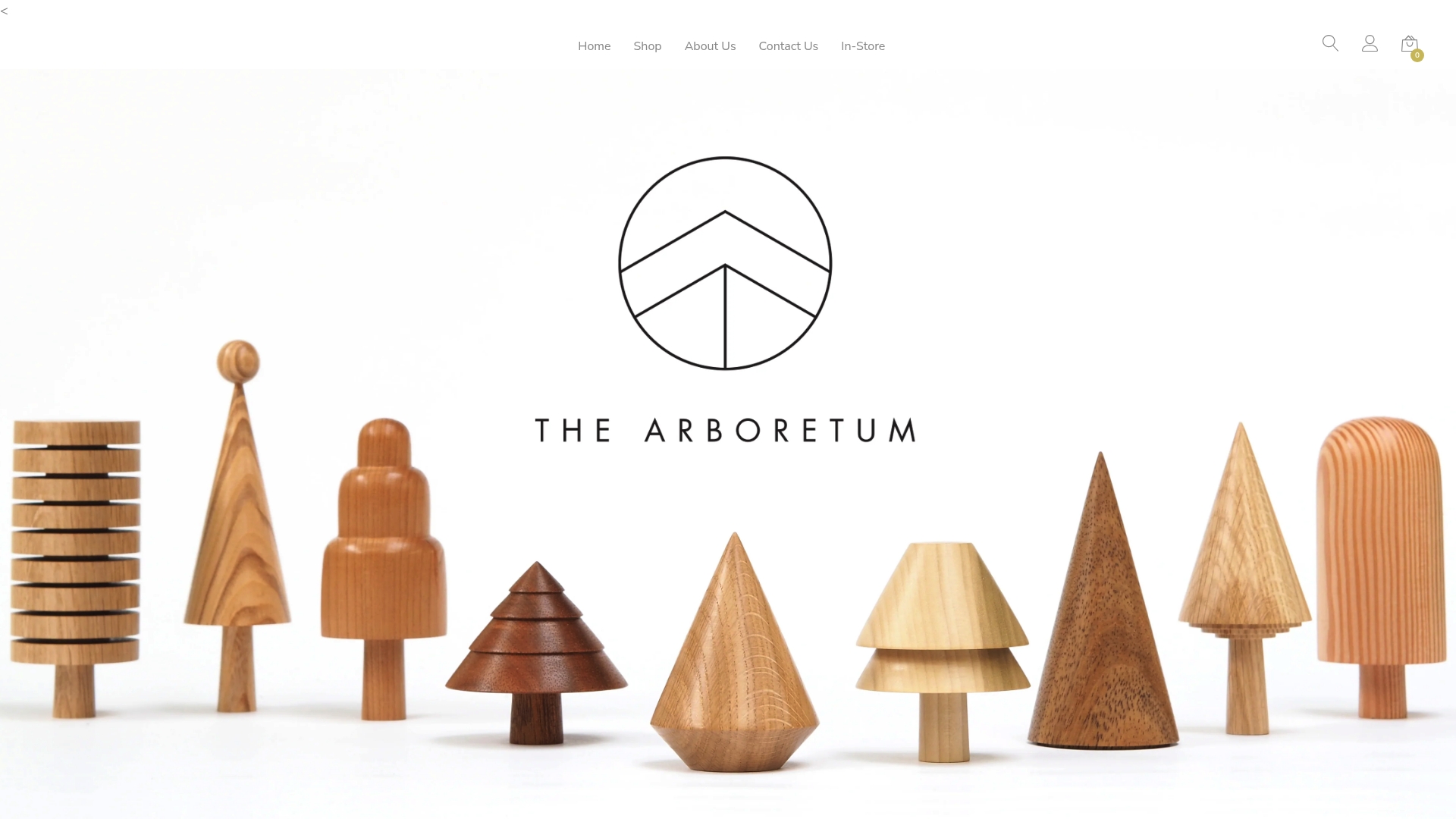
If you would like something that is yours alone, the custom collection starts at $28 for a Custom Single Tree, with Custom Woodland at $126 and Custom Forest at $239. Our Floating Shelf and Tree Candle are $40 each and can be found in the new trees collection. Our packaging is designed to be eco-friendly, so the gift arrives with the same care as the tree itself.
A buying checklist for family-friendly decor
Whether you are choosing from us or anywhere else, this order of questions keeps you out of trouble.
- Who will reach it? Match the piece to your youngest child, not the oldest. Under-threes need the strictest approach.
- Can anything come off? Look for single-piece construction, secure fixings and no loose parts.
- What is the finish? Ask whether the finish is described as food-safe or non-toxic, and read the seller’s own description.
- How does it age? Natural wood develops a patina and hides small marks, which suits family life.
- Does it still work in two years? Prefer neutral, versatile pieces over themed ones, and keep themes on the replaceable layer.
- Where will it live? Put fragile or special pieces on a high shelf, and put child-handleable ones low and stable.
For a wider look at how to put these ideas together across the home, there is a good overview of decorating a family home with child-friendly materials and furnishings.
A note for Christmas
The festive season is when decor and children collide most. Low branches, glass baubles and cords all sit at toddler height. Choose unbreakable ornaments, hang the smaller ones higher, and use short loops instead of long ribbons. Our guide to child-friendly Christmas tree safety for wooden ornaments goes through this in detail, and our piece on neutral Christmas decor shows how one artisan wooden piece can lift a simple scheme.
FAQ
How do I make my home kid-friendly without losing style?
Keep the big, permanent elements neutral and durable, then bring in colour and personality through art, books and textiles. Choose wipeable paint, washable rugs, rounded edges and plenty of storage. This lets the look evolve as your children grow without redecorating.
What decor is safe for a toddler’s room?
Avoid anything with small detachable parts, long cords, loose magnets or accessible button batteries, as the Child Accident Prevention Trust advises. Fix tall furniture to the wall, avoid floor lamps that can be knocked over, and keep decorative objects out of reach unless they are designed for little hands. Ask a health visitor or the Child Accident Prevention Trust if you are unsure about a specific item.
Is wooden decor a good choice around children?
Solid wood is hardwearing and copes well with everyday knocks. Look for rounded edges, dulled points and a finish the seller describes as food-safe. Our child-friendly options are designed with dull points and food-safe finishes for this reason.
How can I display my child’s artwork without clutter?
Rotate it. Use front-opening frames that hold several pictures, plus a pinboard or magnetic board, and let your child choose which pieces stay up. A one-in-one-out rule keeps the display fresh and the walls tidy.
Should I decorate a child’s room around a theme?
Yes, but keep the theme on a layer you can change easily, such as a feature wall, bedding or a shelf display. Children outgrow themes quickly, so permanent elements stay neutral and the fun lives in the accessories.
Sources
- How interior designers make their homes child-friendly, Ideal Home
- Designing for children, Homes & Gardens
- Parents’ Pack, Child Accident Prevention Trust
- Toy safety requirements, legislation.gov.uk
- Children’s bedroom design, Homebuilding
- Children’s bedroom ideas, Homebuilding
- Playful styling ideas for children’s rooms, Reclaim Magazine
- Kids’ bedroom ideas, House & Garden
- Playroom ideas, Architectural Digest
- Displaying kids’ artwork, Ideal Home
- Nature-inspired room decor
- Decorating a family home
Follow Us On Social