

Wabi-sabi decor is a way of furnishing a home around natural materials, soft muted colours and objects that show their age, their hand-making or their flaws. You don’t buy a look. You choose fewer, better pieces, and you let the knots, chips and uneven edges stay. This guide covers what the idea means, the palette and materials that suit it, room-by-room ideas, and how to carry it into Christmas with a tree that feels calm rather than coordinated.
TL;DR
- Wabi-sabi finds beauty in things that are simple, imperfect, natural and impermanent, so the aim is character, not polish.
- Build on warm off-whites, creams and earthy tones, then add raw materials such as wood, linen and hand-thrown ceramics.
- Choose handmade pieces with visible grain and knots. They are the quickest way to add wabi-sabi character to a shelf, table or tree.
- For Christmas, mix natural materials, edit as you go and keep the colours muted.
- Buy fewer pieces, but make each one count.
Table of Contents
- What wabi-sabi decor actually means
- The wabi-sabi palette: warm, soft and earthy
- Materials and textures that earn their place
- Putting it together room by room
- A wabi-sabi Christmas tree
- What makes an ornament wabi-sabi
- Perspective: why we make trees with the knots left in
- Bring the look home with handmade wooden trees
- Common mistakes to avoid
- A starter plan for this weekend
- FAQ
- Sources
What wabi-sabi decor actually means
The phrase comes from Japanese culture. The Cambridge Dictionary defines wabi-sabi as finding pleasure and beauty in simple things that may be old or imperfect, or may not last. It also describes it as finding beauty and harmony in what is simple, imperfect, natural, modest and mysterious.
In interiors, that becomes a practical attitude. House Beautiful presents wabi-sabi design as a lifestyle approach rooted in Japanese culture rather than a passing trend, one that embraces natural beauty and the imperfections of life. The same piece links the sense of ease in these rooms to accepting chips and nicks as character, and to favouring matte, textured finishes over glossy ones.
So a wabi-sabi room is not a minimalist showroom and it is not a rustic theme. It is a room where nothing is trying to look brand new.
What it is not
It isn’t distressing new furniture to look old, and it isn’t a beige shopping list. The point is honest materials and things you will keep. A single wooden bowl with a knot running through it does more than a dozen mass-produced “rustic” accessories, because the flaw is real and the piece has a story.
The wabi-sabi palette: warm, soft and earthy
Colour is where most homes either succeed or drift into cold minimalism. Good Homes Magazine recommends warm paint colours such as cream, warm white or beige as a base, with deeper earthy tones such as terracotta or brown layered in. It also advises avoiding stark, bright whites in favour of warm off-whites and creams that feel softer and more inviting.
House Beautiful’s guide suggests the same neutral foundation, with warm whites and taupe, and accents such as sage, olive, dusty rose or terracotta used sparingly.
A simple way to apply this:
- Base (about 70%): warm white, cream, oatmeal or taupe on walls, large textiles and sofas.
- Depth (about 20%): brown, walnut tones, terracotta, deep clay.
- Accent (about 10%): sage, olive or dusty rose, in one or two small objects.
That split is a rule of thumb of ours, not a formal standard. The principle is restraint: if everything is an accent, nothing is calm.
If you want to go deeper on tone, our guide to earthy ornament colour palettes looks at why colours that don’t match exactly often look better together.

Materials and textures that earn their place
Wabi-sabi relies on materials that change with use. House Beautiful points to patina and weathered wood, hand-thrown ceramics and textured pieces, all in matte finishes. Good Homes adds that you should prioritise natural, raw organic materials that develop character over time, and bring in tactile fabrics such as linen and cotton.
Wood
Wood is the most forgiving place to start. It is warm, it ages gracefully, and every piece is different. Look for visible grain, natural knots and matte or oiled finishes rather than thick gloss. Maple is pale and soft-looking, walnut is deep and chocolatey, and oak sits in between with a strong open grain. Mixing two of these on one shelf gives you variation without introducing a new colour.
For more on working with grain, see our ideas for wood grain decor in warm, textured homes, and for the wider picture, wooden decor trends for UK homes.
Ceramics and glass
Choose pieces with uneven glazes, slightly wonky rims and visible fingerprints from the making. If you like the idea of handmade, irregular accessories, this minimalist mug design guide shows how simple shapes and small details can carry a lot of personality.
Textiles
Linen that creases, cotton that softens with washing, wool throws in undyed shades. Skip anything shiny or heavily patterned. The texture should do the talking.
Plants and found things
Branches in a plain jar, dried stems, a smooth stone on a windowsill. Nothing needs to be perfect or arranged symmetrically.

Putting it together room by room
Living room
Start with fewer objects and give each space. A low table with one ceramic bowl, one candle and one wooden piece looks deliberate. Cluster in odd numbers and leave gaps. Keep lighting warm and low, and add a linen cushion in an off-white or clay shade.
Shelves and mantels
Shelves are where wabi-sabi often fails, because people fill every space. Aim for roughly a third of the shelf empty. Place a small wooden tree or sculptural piece next to a stack of books and let the negative space frame it. Our nature-inspired decor ideas cover more ways to style natural wood without it feeling themed.
Bedroom
Rumpled linen bedding, a wooden stool as a bedside table, one hand-made object on top. Avoid a matching set. A bedroom that looks collected over time feels more restful than one bought in a single order.
Entrance and kitchen
A wooden tray for keys, a clay jug for stems, an oiled board left on the counter. These are working objects, which suits the philosophy: use makes them better.
A wabi-sabi Christmas tree
Christmas is where many people want to keep the calm but feel pulled towards sparkle. The good news is that natural materials and a wabi-sabi tree go together very well.
Start with natural materials
House & Garden quotes designer Sean Symington on pairing natural materials with handmade details, and he treats a tree like an interior: it is never finished and you can always edit. His advice to err on the side of more, because you can remove ornaments if it feels overdone, is useful for anyone nervous about clutter.
SheerLuxe features Birdie Fortescue’s approach: bring nature indoors with ivy, holly and spruce for texture, scent and warmth, and mix baubles collected over the years with newer ones, adding handmade touches such as gingerbread biscuits and simple bows in hessian ribbon. That mix of old and new is very much in the spirit of wabi-sabi.
A simple recipe
- Keep the colours muted. Creams, soft greys, natural wood tones and a little muted metal.
- Choose wood, felt and straw over plastic. Gardens Illustrated says the most beautiful decorations use real, natural materials, which tend to be a more sustainable alternative to plastic. It also suggests muted straw snowflakes for neutral or Scandi-inspired schemes.
- Mix ages and makers. Hand-me-down baubles beside new handmade pieces.
- Let some branches show. Dense, symmetrical coverage is the opposite of the look.
- Edit after a day. Live with it and remove what feels forced.
For a tree that stays neutral without feeling flat, one sculptural piece can do a lot. We wrote about a single artisan wooden piece that transforms neutral Christmas decor, and about candle-safe Scandi Christmas decor for homes that like a quieter, Nordic feel.
What to do with the tree afterwards
If you use a real tree, how you dispose of it matters. Ecologist Paul Caplat writes in The Conversation that chipping a tree for mulch or compost stores carbon in soil more stably than burning it, and that landfill is the worst option because it releases both carbon and methane. Wooden ornaments, meanwhile, simply go back in a box and return every year, which is a quiet kind of sustainability.
What makes an ornament wabi-sabi
An ornament earns the label when it has these qualities:
- Natural material: solid wood, clay, straw, wool or felt, not plastic or painted-over resin.
- Visible making: tool marks, slight asymmetry, grain lines, knots.
- Matte or low-sheen finish: the surface should look touched, not sealed under plastic.
- Longevity: it should look better after ten Christmases than after one.
- A story: you know where it came from and who made it.
Wood meets all of these naturally. A knot is not a defect to be hidden but the most interesting part of the piece, and no two are alike. That is the idea behind how we work at The Arboretum, and it’s why our trees suit the style so well.
Perspective: why we make trees with the knots left in
We started making wooden trees because so much decoration looks the same from one house to the next. A mass-produced ornament has no history. A piece of maple or walnut does.
When we cut and shape a tree, we don’t hunt for the cleanest board. We like the knots, the colour shifts and the texture, because they are what make each tree its own small piece of art. We source our hardwoods sustainably and send our pieces out in eco-friendly packaging, because a decoration with a story should arrive with one that doesn’t cost the earth.
Wabi-sabi is often described as a look, but we think of it as a habit: choose things you will keep, and let them age. A set of handmade wooden trees on a shelf, a sideboard or a mantel does exactly that. Families who like to collect add a tree each year. People who give gifts like that every piece is slightly different, so the present is never generic.
For households with young children, we also make child-friendly options with dull points and food-safe finishes, so the calm look doesn’t mean keeping everything out of reach.
Josh
Bring the look home with handmade wooden trees
If you want a single starting point for wabi-sabi decor, handmade wood is it. Our Woodland sets are priced at $126, with variations including Oak and Droplets, and a Ninja Edition at $148. The larger Forest sets are $239. Child-friendly versions of both are available at the same prices.
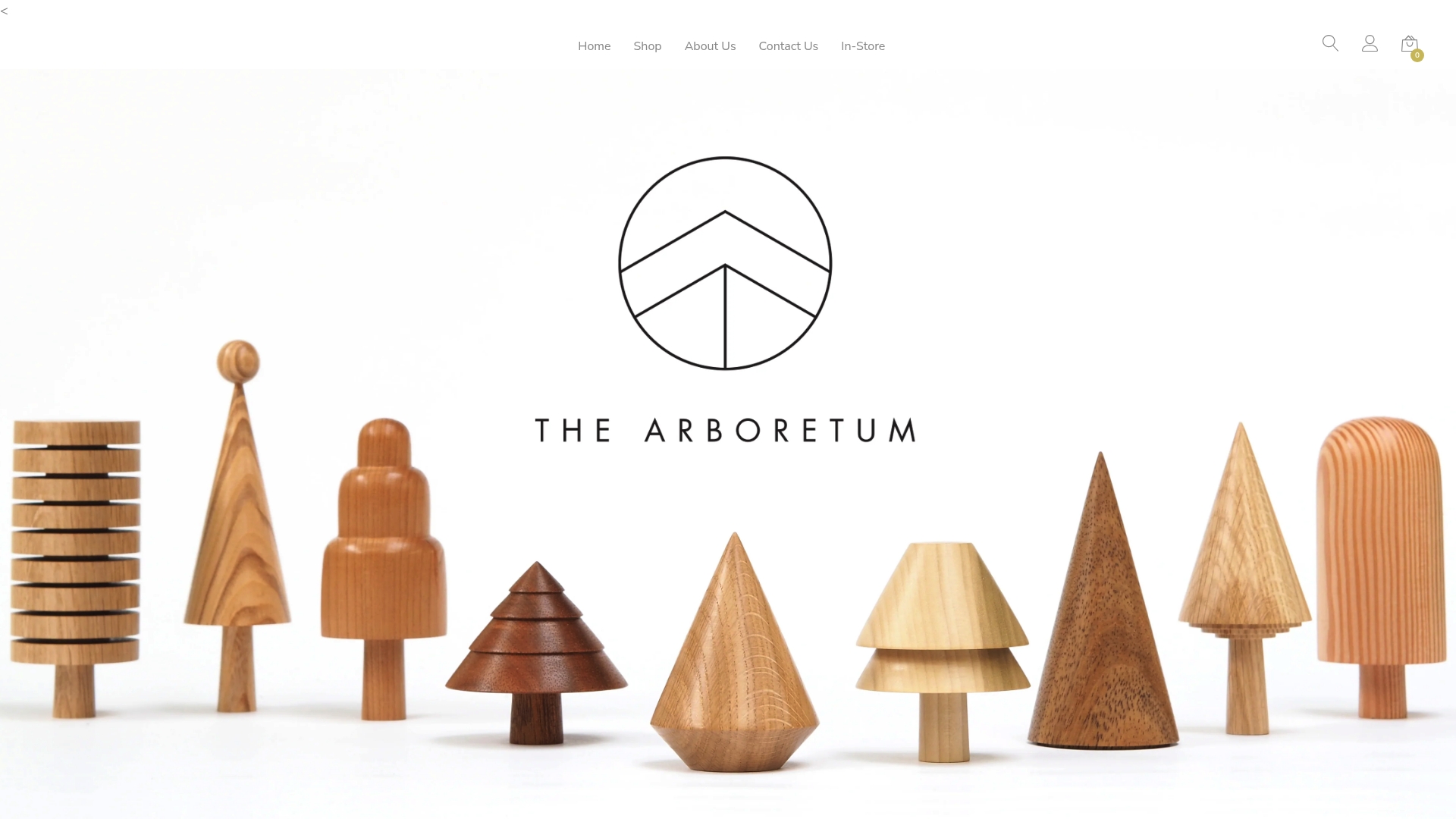
If you’d like something personal, the custom collection has a Custom Single Tree at $28, plus Custom Woodland at $126 and Custom Forest at $239. For something different on a shelf or table, our Floating Shelf and Tree Candle are $40 each. You can see everything on our shop home page.
If small hands are going to be near the display, our ideas for ornament displays kids can reach show how to arrange wooden pieces safely and still keep the look.
Common mistakes to avoid
- Treating it as a colour scheme. Beige walls and nothing else is not wabi-sabi. Texture and material do the work.
- Buying fake age. Pre-distressed furniture and printed “wood” lack the honesty the philosophy is about.
- Over-styling. If every surface is arranged, the room reads as staged. Leave some things slightly off.
- Too much matching. A set bought together in one go has no history. Mix makers, ages and woods.
- Cold white. Bright, stark white undermines the warmth. Choose off-whites.
- Glossy finishes. Matte and oiled surfaces feel touched; high gloss feels sealed.
A starter plan for this weekend
You don’t need to redo a room. Try this in a couple of hours:
- Clear one shelf or surface completely.
- Put back only three things: something wooden, something ceramic or glass, something green or dried.
- Swap one cold-white or glossy item for something warm and matte.
- Add a linen or cotton textile in cream or oatmeal.
- Live with it for a week, then remove one more item.
Over time, replace mass-produced pieces one at a time with handmade ones. The room will gradually become more yours.
FAQ
What is wabi-sabi decor in simple terms?
It is decor that values simplicity, natural materials and honest imperfection. Rooms use soft, warm colours, matte textures and handmade or ageing objects rather than glossy, matching sets. The idea comes from Japanese culture and is about finding beauty in what is modest and impermanent.
What colours work best for wabi-sabi interiors?
Start with warm whites, creams, beige or taupe, then add deeper earthy tones such as terracotta or brown. Accents like sage, olive or dusty rose work in small doses. Avoid stark, bright white, which can feel cold.
How do I make a wabi-sabi Christmas tree?
Keep colours muted and choose natural materials such as wood, felt and straw. Mix older baubles with newer handmade pieces, add natural greenery if you like, and edit once the tree is up. Aim for something that looks collected, not coordinated.
Are wooden ornaments a good fit for wabi-sabi?
Yes. Solid wood has visible grain, knots and a matte finish, and it ages well, which are the qualities the style values. Handmade pieces in maple, walnut or oak also bring warmth and variety without adding extra colour.
Sources
- Cambridge Dictionary: wabi-sabi definition
- House Beautiful: What Is Wabi Sabi Interior Design?
- Good Homes Magazine: Wabi Sabi interiors
- House & Garden: How to decorate a Christmas tree properly
- SheerLuxe: Birdie Fortescue’s guide to decorating and hosting
- Gardens Illustrated: The best natural Christmas decorations
- The Conversation: Sustainable Christmas trees, an ecologist’s buying guide
Follow Us On Social