

A good custom wood ornament comes down to four decisions: the wood, the way it is made, the finish and the personal touch. Get those right and you have something that lasts decades and carries a story. Whether you buy a handmade piece or make one yourself, this guide covers each decision in turn, plus the safety checks for children and ideas for gifts.
TL;DR
- Choose the wood for the look you want: walnut for rich colour, maple for fine detail, oak for a sturdy, characterful grain.
- Pick a finish for how the ornament will be used: oil for natural grain, lacquer for pieces that get handled a lot.
- Making your own? Wood dust is a real health hazard, so control dust at source and wear suitable respiratory protection.
- For children, look for dull points, a food-safe finish and no small detachable parts.
- Personalise with a name, date or a one-off natural knot rather than relying on printed text alone.
Table of Contents
- What counts as a custom wood ornament
- Choosing the wood
- How custom wood ornaments are made
- If you make your own: dust and tool safety
- Finishes: protecting the wood and shaping its look
- Making an ornament safe for children
- Personalising a wooden ornament
- Wooden ornament gift ideas
- Our perspective on custom wood
- Choosing from our range
- Caring for wooden ornaments
- FAQ
- Sources
What counts as a custom wood ornament
The phrase covers a wide range. At one end sits the laser-engraved bauble with a name and a year. At the other is a hand-shaped tree with a visible knot, made from a single piece of hardwood and chosen by you from a set of options.
The difference matters when you shop. Engraved pieces are personalised by text or image. Handcrafted pieces are customised by material, form and grouping: a single tree, a small woodland of several, or a larger forest. Both can be right. A name on a bauble suits a first Christmas or a new home. A grouped set of trees suits a mantelpiece or shelf that you want to look considered all year, not only in December.
We make the second kind. Our trees are handmade from sustainably sourced hardwoods such as maple, walnut and oak, and we leave natural knots and textures visible, so no two are identical.
Choosing the wood
Wood is the biggest single influence on how an ornament looks and feels. Here is how the common choices behave.
| Wood | Look | Good for | Watch for |
|---|---|---|---|
| Walnut | Deep, rich brown with strong contrast | Statement pieces, pairing with paler woods | Dark tone hides very fine detail from a distance |
| Maple | Pale, clean, subtle figure | Small details and crisp edges | Plain unless it has figure or spalting |
| Oak | Open, pronounced grain | Sturdy, rustic ornaments | Very hard to carve by hand |
| Lime and alder | Soft, pale, even | Beginner carving | Less dramatic colour |
Some of this is backed by makers’ guidance. One CNC ornament guide notes that hard maple holds small details, while soft basswood is easy to paint but can leave fuzzy detail. A UK laser-cutting guide points out that walnut gives rich colour contrast. For hand carving, London Green Wood recommends lime and alder for beginners because they are soft and stay soft as they dry, and says oak and robinia are very hard to carve and not recommended for beginners.
That last point is a useful way to see the buying side too. Oak is harder to work, which is part of why a well-made oak piece is worth paying for. If you want to see how a maple with natural character can be used around the home, our piece on spalted maple decor has project ideas.
Responsible sourcing
London Green Wood advises choosing UK-grown hardwoods and avoiding tropical hardwoods. Whoever makes your ornament, ask where the timber came from. We source our hardwoods sustainably and package our pieces in eco-friendly materials. If you want to understand certification and what to look for on a gift, see our guide to UK safety, FSC proof and packing for wooden gifts.
How custom wood ornaments are made
There are three main routes, and each leaves a different mark on the finished piece.
Hand shaping and turning. The maker rounds the stock, then refines with chisels and sanding. This is how a tree gets its individual silhouette. A woodturning guide from This Old House shows securing the wood on a lathe and rounding it with a roughing gouge, with skew chisels used for detail. The result is slightly different every time, which is the point.
Laser cutting and engraving. A design file is prepared in software, the wood is held flat with magnets or pins, and the laser cuts or engraves it. After that comes sanding, painting or staining and fitting a hook or ribbon. A UK laser-cutting guide sets out the process step by step. It is excellent for names, dates and crisp patterns.
CNC routing. A machine carves from a digital model. One CNC guide suggests a 1/16-inch tapered ball nose bit for finishing and a 1/8-inch downcut end mill for cut-outs, and notes that ornaments are where offcuts earn their keep, since small scale shows detail a large panel forgives.
For a decor piece you want to keep, hand shaping gives the most individual result. For a name, date or message, laser engraving is hard to beat. Many people combine them: a handmade tree for the shelf and an engraved tag for the gift label.

If you make your own: dust and tool safety
Making an ornament at home is a lovely project, but the dust deserves respect. The Health and Safety Executive states that all wood dust is hazardous: it can cause asthma, dermatitis and irritation of the eyes, nose and throat, and hardwood dust can cause a rare form of nasal cancer. Sawing, routing and sanding are among the activities likely to create high exposure.
Practical steps, following HSE guidance:
- Control dust at source, with local exhaust ventilation where you can, rather than relying on a mask alone.
- Where dust remains, wear suitable respiratory protective equipment. HSE’s woodworking guidance says it should have an assigned protection factor of at least 20.
- Clean up with at least M-class vacuum equipment, not compressed air or dry sweeping, as HSE recommends.
- Keep tools sharp. London Green Wood notes that sharp tools are safer than blunt ones.
If you have asthma or a skin condition, speak to your GP before taking up regular sanding or cutting at home.
Finishes: protecting the wood and shaping its look
The finish changes both the appearance and how well the ornament copes with handling, humidity and years of storage. Lichfield College advises choosing a finish according to the ornament’s use, viewing conditions, grain and expected wear, and testing it on scrap wood first.
The main options, summarised from a UK finishing guide from Treatex:
- Penetrating oil highlights the grain and protects against moisture and dirt.
- Water-based finishes dry quickly, have minimal odour and resist yellowing, which suits lighter woods.
- Wax gives a soft natural sheen and a pleasant feel in the hand.
- Shellac gives a smooth, glossy, warm traditional look but is not fully waterproof.
Building Conservation explains the visual difference between two of these: wax scatters light for a softer appearance, while varnish builds a smoother coat that looks brighter and glossier. For a handmade tree whose knots and texture are the attraction, a soft oil or wax look usually shows them best. For an ornament that will be passed around, a hard-wearing lacquer is more practical; the CNC guide above suggests satin spray lacquer for handled ornaments.
If you are finishing at home and have children in the house, our guide to non-toxic wood finishes and the 130 g/L VOC limit explains what to look for.
Making an ornament safe for children
Parents often ask us for decorations that small hands can handle. These are the checks we would make on any wooden ornament:
- Shape. Pointed tips on a tree can catch a face or eye. Dull, rounded points are friendlier. We explain why in our piece on dull point ornaments.
- Finish. Choose a finish made to be safe around mouths and hands. Our child-friendly trees use food-safe finishes.
- Size and parts. Avoid anything with small detachable pieces for toddlers. Pieces should be sturdy enough not to snap into splinters.
- Placement. Keep fragile or special pieces higher up and offer a low shelf of robust ones. Our guide to ornament display ideas where kids can reach shows how.
If an item is described as a toy, or is likely to be treated as one, check that it carries an age warning and relevant UK safety marking, and follow the age guidance on the label.
Personalising a wooden ornament
There are four ways to make an ornament feel like yours.
- Text. Names, dates and short messages, usually engraved. Keep it short: small ornaments carry two lines at most before they get crowded.
- Design. A motif that means something, such as a pet silhouette, a house outline or a favourite tree shape.
- Material. Choosing walnut for its dark tone, or pairing a pale wood with a dark one. Contrast is a classic trick: one turning project combines maple for the body and holly for fine details to make the details stand out.
- Grouping. A set tells a story in a way a single piece cannot. A woodland of trees in different heights looks like a landscape.
We offer customisable designs as single trees, woodland sets and forest sets, so you can choose the scale. You can browse them on our custom collection page.
Wooden ornament gift ideas
The best gift is matched to the person and the occasion.
- For a new homeowner: a single walnut or maple tree for a shelf. Our Floating Shelf and Tree Candle pieces, both $40, suit this well, and you can see them on the new trees page.
- For a collector: a set that can be added to each year. A woodland set starts a collection that grows naturally.
- For a family with young children: a child-friendly set, with dull points and food-safe finishes.
- For someone who loves a themed look: our Ninja Edition woodland set, at $148, is a playful departure from the traditional.
- For a gift that spans the whole season: pair a tree with a scented candle. A Christmas ornament candle beside a wooden tree makes a considered, small-scale present.
When it comes to wrapping and presenting, our guide on wooden gift ornaments, UK safety and packing covers the details. If you want to style the finished pieces, see tabletop Christmas tree styling for UK homes.
Our perspective on custom wood
We started making wooden trees because so much seasonal decor looks the same from one home to the next. A piece of walnut, maple or oak never does. Every knot, every change in grain is different, and we leave them visible on purpose.
When someone asks us what makes a custom ornament worth having, we say it is the story. It is the wood that was chosen, the hands that shaped it and the person it was made for. That is hard to get from a mass-produced bauble.
Our advice is to choose the wood first, the scale second and the personal touch third. A set of trees in mixed woods gives you something that looks good on its own and better each year as you add to it. We also think a decoration should be safe where children live, which is why we make child-friendly options with dull points and food-safe finishes.
Josh
Choosing from our range
If you would rather buy than make, our trees come as single pieces, sets and custom collections. Woodland sets are $126, Forest sets $239, a Custom Single Tree $28, and variants include Oak, Droplets and Child Friendly versions. Start with the Woodland sets for a first purchase, or go bigger with the Forest sets.
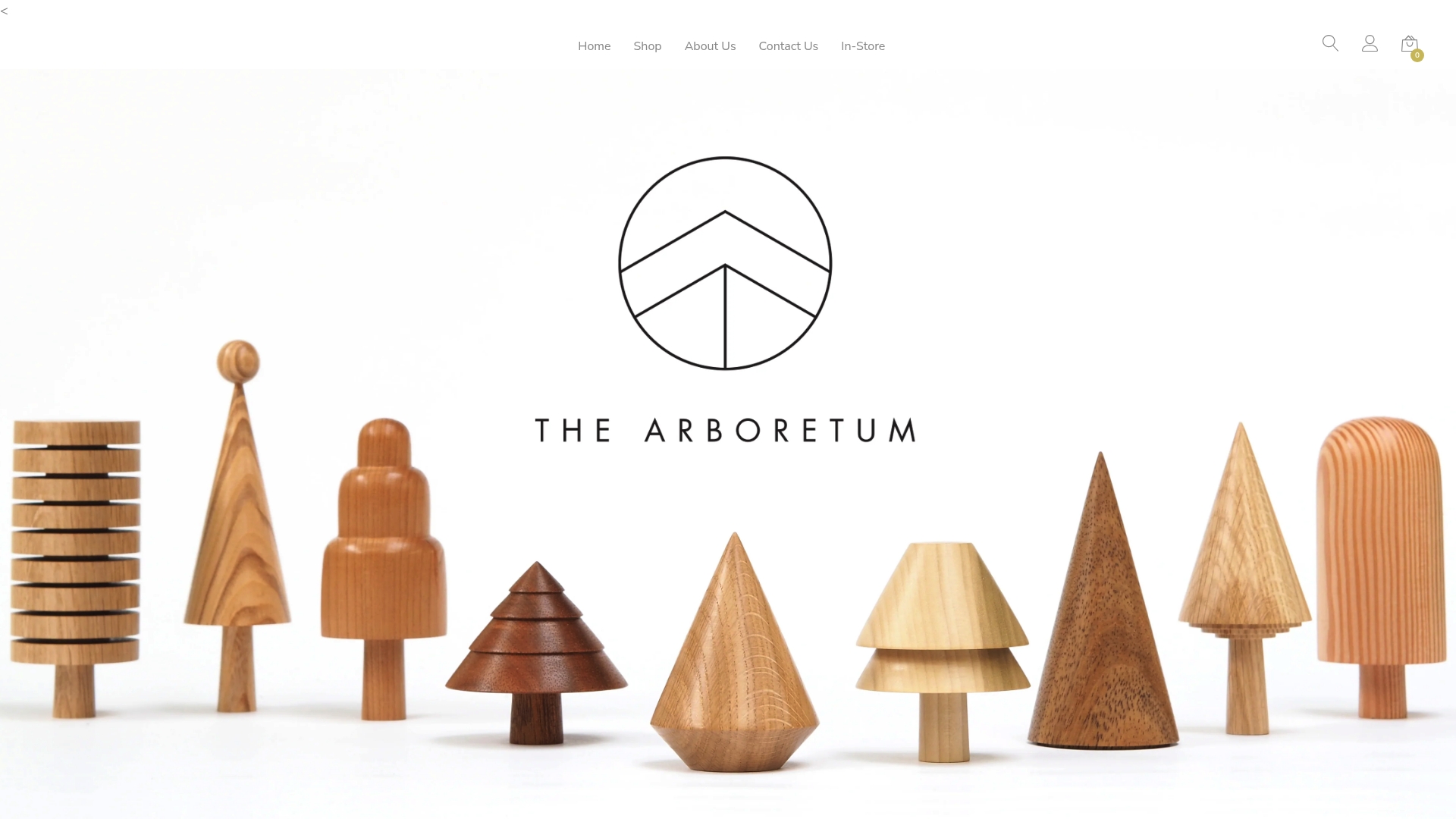
If you want a piece made your own way, visit our custom collection to choose the scale and design.
Caring for wooden ornaments
Good care keeps an ornament looking right for decades. London Green Wood advises that you never put wooden items in a dishwasher or leave them soaking, dry them thoroughly and, once dry, oil them with an edible curing oil. Dry freshly worked wood slowly, away from heat or direct sun, to avoid cracking.
Store ornaments somewhere dry, wrapped in acid-free tissue, and avoid damp lofts or garages. For step-by-step advice, see our guides on wooden ornament care and cleaning wooden ornaments, which both recommend testing a method on a hidden spot first. If your ornaments are laser-cut and show soot, a white vinegar and cloth is one suggested way to lift it, though a hidden test spot is wise first.
FAQ
Which wood is best for custom ornaments?
It depends on what you want. Walnut gives rich colour, maple holds fine detail, and oak gives a bold, characterful grain. For hand carving as a beginner, softer UK woods such as lime and alder are easier to work.
Can I make a wooden ornament safe for toddlers?
Choose designs with rounded, dull points, a finish intended to be safe around mouths and hands, and no small detachable parts. Follow the age guidance on any label. Our child-friendly trees are made with dull points and food-safe finishes.
How should I finish a wooden ornament?
Match the finish to its use. Oil or wax shows the grain and feels natural, while lacquer protects pieces that are handled often. Test the finish on scrap wood first.
Is it safe to sand and cut wood at home?
Yes, with precautions. The HSE says wood dust is hazardous, so control it at source, wear suitable respiratory protection and clean up with appropriate vacuum equipment rather than sweeping or compressed air.
How do I clean a wooden ornament?
Wipe gently with a barely damp cloth, dry it straight away and never soak it. Test on a hidden area first. Our care guide has more detail.
Sources
- Wood dust: Controlling the risks (HSE WIS23)
- COSHH essentials for woodworkers (HSE WD0)
- Resources, London Green Wood
- CNC Christmas ornaments: size, wood, bits and finishing
- How to create custom wooden Christmas ornaments with a laser
- How to make wooden Christmas ornaments, This Old House
- Woodcarving for beginners, Lichfield College
- How to seal and finish your wood carvings, Treatex
- Going with the grain, Building Conservation
- Turning a birdhouse ornament
- Custom laser-cut Christmas ornaments with wood
Follow Us On Social