

Wood and plastic differ most in how long a piece lasts, what it is made of and how it ends its life. Solid wood tends to win on lifespan and on a lower yearly carbon footprint, and a well-made wooden piece suits the youngest children because it rarely breaks into sharp fragments. Plastic is lighter, brighter and easier to wipe down, which is why it still earns a place in the bath and the garden. Below you will find the evidence, the UK safety checks that apply to both materials and a simple way to choose. We make handmade wooden trees, so we also show where wood suits a home with children in it.
TL;DR
- A 2025 life cycle study found wooden toy cars emitted 0.18 kg CO2eq per product per year against 0.79 kg for plastic, a 77% reduction.
- Wood tends to dent rather than shatter, so it usually stays in use for longer, and can be handed on to a sibling or cousin.
- Natural does not mean untested: toys sold legally in the UK need a UKCA or CE mark whatever they are made of.
- Plastic suits bath-time and mud. Wood suits everyday play and display, and the youngest children.
- For a family home, a wooden piece with dull points and a food-safe finish is the easiest way to combine character with peace of mind.
Table of Contents
- The short answer for busy parents and gift buyers
- Durability and lifespan
- Safety: are wooden toys safer than plastic?
- Carbon footprint: wood vs plastic
- Play value, cost and care
- Which should you choose by age and purpose?
- Where wood really earns its place at home
- Choose a wooden tree for your home
- FAQ
- Sources
The short answer for busy parents and gift buyers
If you want one rule: buy fewer, better things that you can pass on. Wood supports that rule more naturally than plastic. It is heavy, solid and repairable, and it gets better-looking with handling rather than scuffed and tired.
That is not a claim that every wooden item beats every plastic one. A badly finished wooden piece with sharp corners is a worse buy than a sturdy, well-designed plastic one. The material is the starting point. Design, finish, size and the safety mark decide the rest.
Durability and lifespan
Durability is the point on which most comparisons agree. GoodtoKnow’s feature, updated in February 2024, reports that well-made wooden toys are generally safer for under-fives because they rarely break into sharp pieces. Thin plastic can crack and leave hard, pointed edges, while solid timber is more likely to take a dent.
The Association Montessori Internationale makes a related point about why wooden materials are used in classrooms: wood lasts much longer and stays in better condition than plastic, it can be refurbished and it survives many children using it over many years. Plastic materials cannot be refurbished in the same way.
The 2025 life cycle study discussed below measured this directly. Average lifespans came out at 7.29 years for wooden toys and 6.17 years for plastic ones, and the wooden ones were reused more often.
Repair and second lives
Solid wood has a practical advantage: a scuffed surface can often be lightly sanded and re-oiled. Plastic cannot be reworked in the same way. That matters for gifts and keepsakes. A piece that can be refreshed is one that can go to the next child, the next owner or the next Christmas.

Safety: are wooden toys safer than plastic?
For babies and toddlers, paediatric advice leans towards wood, with conditions. A Seattle Children’s paediatrician explains that children take in more plasticiser chemicals than adults because they mouth objects and breathe faster. For the 0 to 3 age group she recommends wood where chemical exposure is the concern. Her checks for wood are plain: look for splinters and sharp edges, and avoid old pieces with chipped paint, which may contain lead.
For babies up to 12 months, Seattle Children’s guidance on toys asks for non-toxic materials, no sharp points or edges, safety for mouthing, nothing breakable, no small parts and no removable button batteries or magnets. It recommends small wooden blocks for this age. These criteria apply to any material, and a smooth, solid wooden shape with a safe finish meets them naturally.
The UK safety mark
In the UK, safety is a legal matter as well as a material one. The NHS children’s health service in Cambridgeshire, Peterborough and Northamptonshire says all toys sold legally in the UK must carry a CE or UKCA mark that is easy to see, readable and hard to remove. It also lists everyday checks: cracks or breaks in plastic, sharp edges from worn pieces, loose small parts and secure battery compartments and magnets.
The rules rest on the Toys (Safety) Regulations 2011. SGS reports that CE marking has been accepted indefinitely in Great Britain since the August 2023 policy reversal, and that on 13 February 2026 the government updated its list of designated toy standards. Among the changes, the element-migration standard EN 71-3 moved to its 2024 amendment, with the older version dropping out of use for presumption of conformity on 16 June 2027. You do not need to memorise any of this. It simply means the mark and the supplier’s current testing matter more than the material.
One more point from the standards world: EN 71-3 limits how much of certain chemical elements can migrate out of a material, and it applies to wooden and natural items as well as plastic. The standards have also expanded in recent years to cover bisphenol A and phenol migration, published in December 2024.
A five-point check for any wooden piece
- Run a thumb and fingertip over every edge and point. Nothing should catch.
- Look for flaking paint or varnish, especially on second-hand pieces.
- Ask what the finish is. For young children you want a food-safe finish.
- Check for parts that could come loose and be swallowed.
- Look for the UKCA or CE mark on anything sold as a toy.
We go further into the same questions for decor in our guide to child-safe wooden decor.
Carbon footprint: wood vs plastic
The best recent evidence is a 2025 life cycle assessment published in the journal Sustainability by Yamane and Kayo, a Japan-based study. It compared toy cars and found wooden ones emitted 0.18 kg CO2eq per product per year, against 0.79 kg for plastic. Replacing plastic with wood cut the yearly figure by 0.61 kg, or 77%. Longer lifespans and more reuse drove much of the gap.

The same study noted that wood has its own impacts in categories such as land use and processing, so the gain is about carbon and lifespan rather than a blanket win. That is why sourcing matters. Responsibly sourced hardwood, a durable finish and packaging that is not wasteful all shape the real footprint.
A UK academic view agrees on what matters most. Matthew Watkins, writing in The Conversation, found that items kept longer, resold or donated have a lower yearly environmental impact. Wooden stacking rings and blocks held relatively high second-hand values and could have second and third lives. Items that hold a child’s interest, have several uses or can be added to a collection have the greatest chance of a long life.
The same logic holds beyond toys. A comparison of bamboo and plastic household organisers looks at sustainability and lifespan in the same way: the longer an item stays in use, the better its footprint per year.
A caution on numbers: you will see averages quoted online, such as a plastic toy footprint of 2.1 kg CO2e. Treat them as rough industry averages and not as figures for the particular item in your basket.
Play value, cost and care
Wood and plastic push play in different directions. Wooden pieces are generally sturdier and encourage open-ended, child-led play, while plastic tends to be lighter and more feature-led with sounds and lights. GoodtoKnow also notes that wooden items need no batteries or bulbs and can work out cheaper than the latest plastic favourites over time.
On cost, think per year of use. A piece that costs more at the start but goes through three children and then to a cousin costs very little per year. A cheap piece that cracks within a season costs more than its label suggested.
| Question | Solid wood | Plastic |
|---|---|---|
| Typical lifespan | 7.29 years in the 2025 study | 6.17 years in the 2025 study |
| Failure mode | Tends to dent | Can crack into sharp edges |
| Yearly carbon (toy cars) | 0.18 kg CO2eq | 0.79 kg CO2eq |
| Best use | Everyday play, display, keepsakes | Bath-time, mud, light-and-sound features |
| Refreshing | Can often be sanded and re-oiled | Cannot be reworked in the same way |
| Weight | Heavier | Lighter |
A balanced home keeps a little plastic for the bath and the garden, as GoodtoKnow’s expert suggests, and chooses wood for what stays in the living room and the toy box for years.
Which should you choose by age and purpose?
- Babies, 0 to 12 months: smooth, solid wooden shapes with no small parts, plus a safe finish. Avoid anything with removable magnets or button batteries, in any material.
- Toddlers: chunky wooden blocks, stackers and simple shapes. Check edges often.
- Older children: mix. Wood for building and imaginative play, plastic where water or mud is involved.
- Gifts: choose something that looks good enough to stay on a shelf. Pieces that double as decor tend to be kept rather than outgrown.
- Collectors: natural knots, grain and a maker’s story are what make a piece worth keeping.
When buying wood, look for clear information about where it comes from. Our guides explain how to verify FSC chain of custody and how to check whether walnut is sustainable. If you are cutting plastic out of the festive season too, see our plastic-free Christmas decorations guide.
Where wood really earns its place at home
Much of the wood-versus-plastic argument is about the toy box. The same reasoning applies to the things children live around: ornaments, shelf pieces and Christmas decorations. Plastic baubles are the classic example. They shatter, leave sharp shards and head to landfill after a few seasons. A solid wooden tree does not do any of that, and it looks the part year-round.
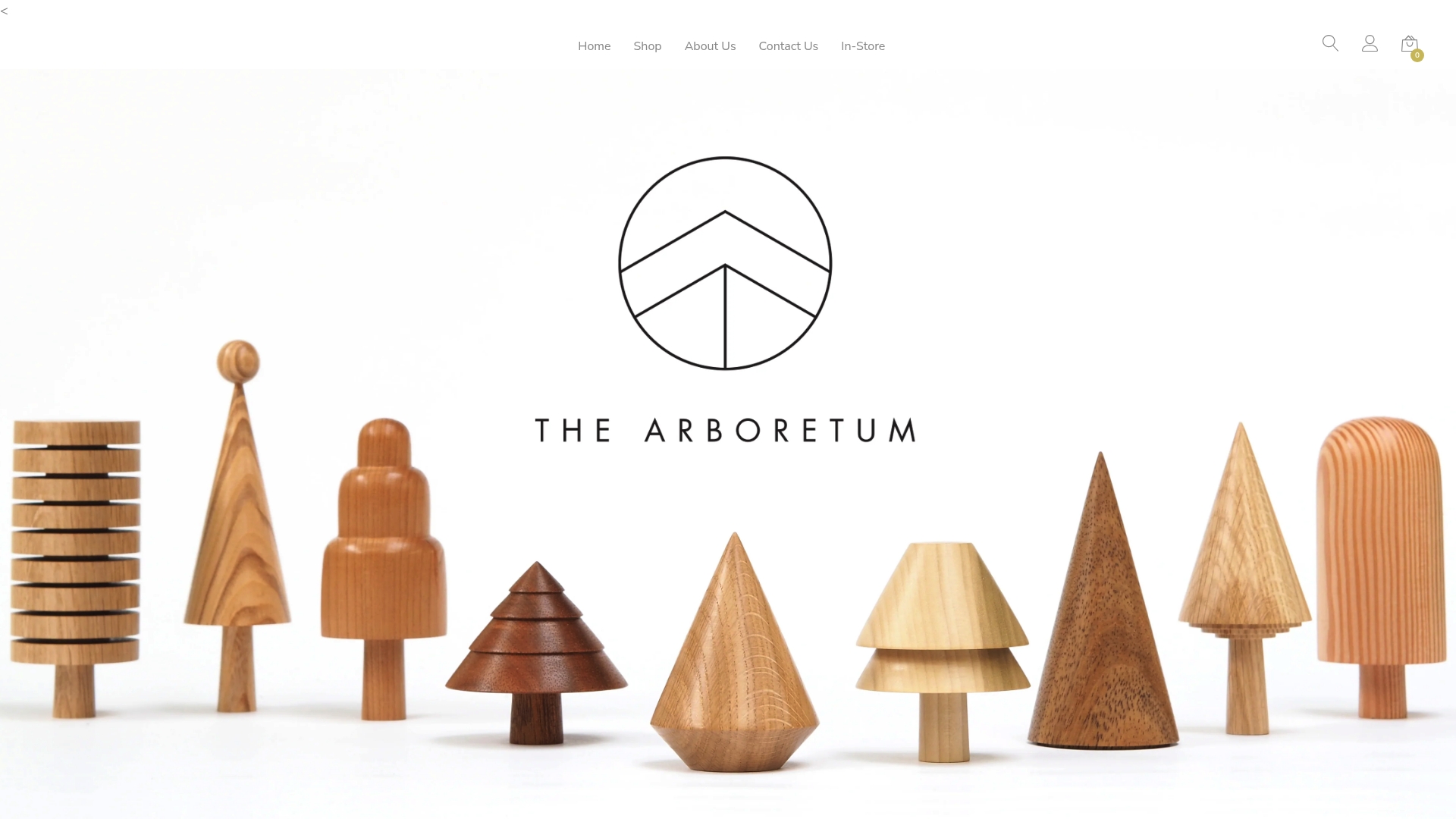
That is the thinking behind our work. Our trees are handmade from sustainably sourced hardwoods such as maple, walnut and oak, with the natural knots and textures left visible, so every piece is different. For families, we make child-friendly options with dull points and food-safe finishes. If you have a tree and small children, our guide to child-friendly Christmas tree safety for wooden ornaments takes you through placement and checks.
Our view: buy it once, keep it for years
We started making wooden trees because so much home decor is made to be replaced. A moulded plastic ornament has no grain, no knot and no story, and it rarely outlasts the box it came in.
Wood goes the other way. Every maple, walnut or oak piece we make carries the pattern of the tree it came from, and no two are quite alike. That is why we leave the knots and textures visible instead of hiding them.
We think the sustainable choice is the one you keep. So we make pieces to be handled, displayed and handed on, and we offer child-friendly versions with dull points and food-safe finishes for homes with little ones.
If you are weighing wood against plastic, ask which one you will still be happy to put out in ten years. For us the answer is wood.
Josh
Choose a wooden tree for your home
If you want the benefits of wood in something that suits a living room, a shelf or a gift, our sets start with the Woodland collection at $126, which includes a Child Friendly version. The Forest collection is $239 and also comes in a Child Friendly version. A Custom Single Tree is $28 in the custom range, and the Floating Shelf and Tree Candle are $40 each in the new trees collection.
For gifts, our guide to UK safety, FSC proof and packing for wooden gift ornaments covers what to look for before you wrap. You can browse everything on thearboretum.co.uk.
FAQ
Are wooden toys safer than plastic?
For babies and toddlers, paediatric guidance favours wood because plastics can contain plasticisers and wood rarely breaks into sharp pieces. Safety still depends on the finish, edges and size, and on the UKCA or CE mark. Check for splinters and avoid old pieces with chipped paint.
What are the main benefits of wooden toys?
They are sturdy, they last, and they can be handed on to siblings or cousins. They need no batteries, they encourage child-led play and they have a lower yearly carbon footprint in the 2025 toy-car study. They also look good enough to display.
Is wood better than plastic for the environment?
On the evidence available, wooden toy cars had a 77% lower yearly carbon footprint, mainly through longer life and reuse. How long you keep a piece matters most. Responsibly sourced wood and low-waste packaging add to the gain.
Do wooden toys need safety testing in the UK?
Yes. Toys sold legally in the UK need a UKCA or CE mark, and chemical limits such as EN 71-3 apply to wooden and natural items as well as plastic. Look for the mark on the product or packaging.
Sources
- Are wooden toys really better than plastic toys? (GoodtoKnow)
- Reason for Wooden Materials (Association Montessori Internationale)
- Choosing Safe Toys for Kids (Seattle Children’s)
- Toys and Play: Birth to 12 Months (Seattle Children’s)
- Toy safety (Cambridgeshire, Peterborough and Northamptonshire Children’s Health NHS)
- UK Updates List of Toy Safety Standards for Great Britain (SGS)
- EN 71 Toy Standards to be Revised in 2025 (SGS)
- Environmental Impact Assessment of Toys Toward Sustainable Design (MDPI Sustainability, 2025)
- How to find the most sustainable and long-lasting children’s toys (The Conversation)
- Bamboo vs Plastic Organizers Explained
Follow Us On Social