

Walnut is deep chocolate brown, harder and more durable. Cherry is warm reddish, finer in grain and easier to work. For decor you will handle every day, such as ornaments, shelves and gifts, walnut is the stronger choice. Its dark, variable grain gives each piece a distinct character, and it pairs well with lighter woods like maple. Cherry suits calmer, warmer rooms, and it changes more over the years than most people expect.
This guide compares the two woods on what matters when you are buying or gifting: how they look, how they age, how tough they are, whether they are safe around children, and whether walnut wood is a problem for anyone with a nut allergy.
TL;DR
- Colour: walnut is deep brown, sometimes with purple or grey tones. Cherry runs from rich red to reddish brown and is paler when freshly cut.
- Ageing: cherry generally darkens with light, while walnut generally lightens, so the two move towards each other over time.
- Hardness: walnut is harder and tougher. Cherry is softer but still strong enough for furniture, and it is very easy to work.
- Allergy: an edible walnut allergy is caused by proteins in the nut, not the wood. Dust from sanding any hardwood is the real irritant, and that matters to makers, not to people who own finished pieces.
- Our pick: for ornaments and decor that will be handled and displayed for years, walnut, with maple or oak alongside it for contrast.
Table of Contents
- Walnut vs cherry at a glance
- How walnut and cherry look
- How the colour changes over time
- Hardness, strength and durability
- What each wood suits
- Walnut wood allergy and nut allergy
- Children, toys and food contact
- Which should you choose?
- What we make, and why we use walnut
- Find your tree
- FAQ
- Sources
Walnut vs cherry at a glance
The table sums up the points a buyer needs. The sections below explain each one.
| Walnut | Cherry | |
|---|---|---|
| Colour (heartwood) | Deep brown, often with darker streaks | Rich red to reddish brown, creamy sapwood |
| Grain | Straight to wavy, bold and varied | Fine, uniform, straight, smooth |
| Hardness (approx. Janka) | 4,490 N (American), 5,040 N (European) | 4,230 N (American) |
| Over time | Tends to lighten | Tends to darken |
| Workability | Good, a little more effort to carve | Exceptionally easy to carve, sand and finish |
| Typical uses | High-end furniture, cabinets, doors, flooring, panelling | Furniture, joinery, mouldings, kitchen cabinets, low-traffic flooring |
The hardness figures come from a UK species chart, which notes that values vary with moisture, growth conditions and grain direction. Treat them as a guide to the order, not as exact measurements for every board.
How walnut and cherry look
Colour
This is what most people actually compare, and the two woods are easy to tell apart side by side.
Walnut is the darker, moodier wood. Its heartwood is a deep brown that can carry hints of purple, grey or even near-black streaks. That depth is why it reads as luxurious in a living room or on a mantelpiece. A woodworking guide describes walnut as deep brown and cherry as warm reddish, which matches what you see in the workshop.
Cherry’s heartwood ranges from rich red to reddish brown, and the sapwood, the pale outer layer of the tree, is creamy white, according to the American Hardwood Export Council’s 2024 species guide. Freshly cut cherry looks lighter and pinker than the cherry you see in an old dining table.

Light changes the picture. In a bright room cherry looks warm and welcoming, and walnut looks deeper. In dimmer light walnut can look almost black and cherry turns more muted. If you are buying for a specific shelf or window, think about how much daylight it gets.
Grain and natural features
Cherry has a fine, uniform, straight grain and a smooth texture. Its natural features include small pith flecks, pin knots and gum pockets or streaks, all noted in the same AHEC guide. These are small, tidy marks rather than bold ones.
Walnut’s grain is more dramatic. It can run straight, wave, swirl or break into knots and figured patches. If you like decor where every piece looks different, walnut gives you more variation than cherry does. That is the logic behind showing off knots and texture instead of sanding them away. We cover the wider idea in our piece on wood grain decor ideas.
How the colour changes over time
This is the part most comparison pages skip, and it affects what you will own in five years.
AHEC says lighter-coloured timbers such as cherry generally darken with light, while darker timbers such as walnut generally lighten (see the species guide). So the gap between them narrows. A pale, pinkish new cherry piece slowly deepens towards a rich reddish brown. A very dark walnut piece softens towards a warmer, more amber brown.
What this means in practice:
- Cherry bought in a showroom will not stay that colour. Expect it to deepen, especially on a sunny windowsill.
- Walnut mellows rather than fades. The shift is gentle, and many people prefer the warmer tone. Our guide to walnut’s amber shift explains what to expect.
- Uneven light gives uneven change. A piece that sits half in sun will change on one side first. Turning ornaments and moving them occasionally keeps the ageing even.
If you want a piece to look the same for decades, keep it out of direct sun whichever wood you choose.
Hardness, strength and durability
The chart cited above gives approximate Janka hardness, a standard test of how much force it takes to push a steel ball into the wood, of 5,040 N for European walnut, 4,490 N for American walnut and 4,230 N for American cherry. Walnut is harder, though not by a huge margin. A woodworking forum might argue about it for pages, but both are comfortably firm enough for furniture.

AHEC’s species guide describes walnut as tough and hard, dimensionally stable once dry, and very decay-resistant in the heartwood. Dimensional stability means it does not swell, shrink or warp much as the air gets damp or dry, which matters for a piece sitting above a radiator or in a kitchen. Cherry is described as relatively soft but strong enough for furniture.
For the buyer, that translates into two simple points:
- Knocks and dents. A harder wood resists small dents from everyday handling, so a walnut ornament, shelf or box tends to keep its crisp edges.
- Fine detail. Walnut holds a sharp point or edge, which is part of why it works for carved shapes such as the pointed tops of trees.
Cherry’s softness is not a fault. It is why cherry is exceptionally easy to machine, carve, mould, sand and finish, according to AHEC, and why makers like it for smooth, flowing shapes.
What each wood suits
Walnut is used for high-end furniture, cabinets, doors, flooring and panelling. Cherry is used for furniture, cabinets, joinery, mouldings, kitchen cabinets, low-traffic flooring and specialist interior work (both lists from the AHEC guide). A separate hardwood buying guide recommends walnut for tables, desks, shelves, boxes and frames, and cherry for shelves, boxes and frames.
For small decorative objects the choice comes down to the look you want:
- Walnut for a dark, grounded, statement piece, or for gifts meant to feel like heirlooms.
- Cherry for a warm, soft, traditional look in rooms with plenty of neutral colour.
- Neither alone if you want contrast. Walnut contrasts well with lighter hardwoods, and maple is a light, clean partner. Cherry’s reddish tones balance best against lighter woods or quiet, neutral surroundings.
Both woods vary from board to board and change with light, so look at the actual piece, or a photograph of it, rather than a colour swatch.
Walnut wood allergy and nut allergy
This is the question that worries gift buyers most, so here it is plainly.
Does a walnut allergy mean you cannot have walnut wood?
No, not on the evidence available. Reactions to tree nuts are caused by proteins in the nut. Food Allergy Canada’s allergist answer says walnut-wood kitchen items are likely extremely low risk, while less-refined nut oils used for maintenance could cause reactions (see the allergist’s reply). The Asthma and Allergy Foundation of America’s allergist response, on a question from a person with nut anaphylaxis, says the allergen is not in the wood and that touching wood from the same tree would not pose a risk (see the AAFA answer).
The practical lesson is to look at the finish. If anyone in your home has a tree-nut allergy, choose a piece finished with something other than a nut oil, and ask your allergist or GP if you are unsure about your own case. Anyone with a severe allergy should always follow their allergist’s advice.
Sawdust is a different matter
Wood dust, not finished wood, is what irritates. A peer-reviewed Finnish study reported walnut-dust patch-test reactions in two patients and noted that occupational skin conditions are mainly caused by hardwood dusts (PubMed record). The UK Health and Safety Executive says wood dust can cause dermatitis and asthma, and that machining hardwoods can produce much more dust than softwoods (HSE guidance WD4). Its workplace limit for inhalable hardwood dust is 3 mg/m³ over eight hours (EH40).
This applies to anyone sanding, sawing or carving at home. HSE recommends effective extraction at the tool, vacuuming with a suitable M-class vacuum, not using brushes or compressed air to clear dust, and washing your hands before eating. If you get a persistent rash, a blocked nose or wheezing after woodworking, see your GP. Cherry is a hardwood too, so the same precautions apply to both woods.
A finished, sealed ornament does not shed dust the way a workshop does.
Children, toys and food contact
Parents often ask which wood is the safest for a child’s decoration or toy. The wood species matters less than the way the piece is made and finished.
What to look for, according to the guidance behind this article:
- A smooth, splinter-free surface. Walnut and cherry are both easy to sand and finish.
- An appropriate finish. The finish and any paint should be suitable for the intended use. For anything a child might mouth, look for a food-safe finish.
- Safe shapes. Sharp points are the main hazard on a tree-shaped piece, so rounded or dulled tips matter.
- Meeting toy-safety rules. A finished toy sold in the UK must meet the applicable UK toy-safety requirements. The species of wood alone does not settle that.
Our child-friendly options are made with dull points and food-safe finishes, and the same shapes are available in the Woodland and Forest sets. If you want to understand finishes better, our guide to non-toxic wood finishes explains the standards that apply.
For chopping boards, both woods can be used with a food-safe finish, according to the buying guide cited earlier, which also lists maple. That is a different job from a decorative tree, so match the wood and the finish to the use.
Which should you choose?
Use these questions to decide.
- Where will it sit? In a bright room, cherry will deepen noticeably, and walnut will mellow. In a dim hallway, walnut gives you a rich dark tone, while cherry looks more subdued.
- How much handling will it get? For pieces that are picked up, moved and packed away each year, walnut’s tougher surface is the safer choice.
- Do you want contrast? Pair walnut with maple or oak for a striking mix. Cherry is easier to use as a single warm tone.
- Is it a gift? Walnut feels weighty and special. For someone who collects, a mix of woods gives them variety.
- Is there a child or an allergy in the home? Choose a food-safe, non-nut-oil finish and rounded points.
For most homes and most gifts, we would choose walnut.
What we make, and why we use walnut
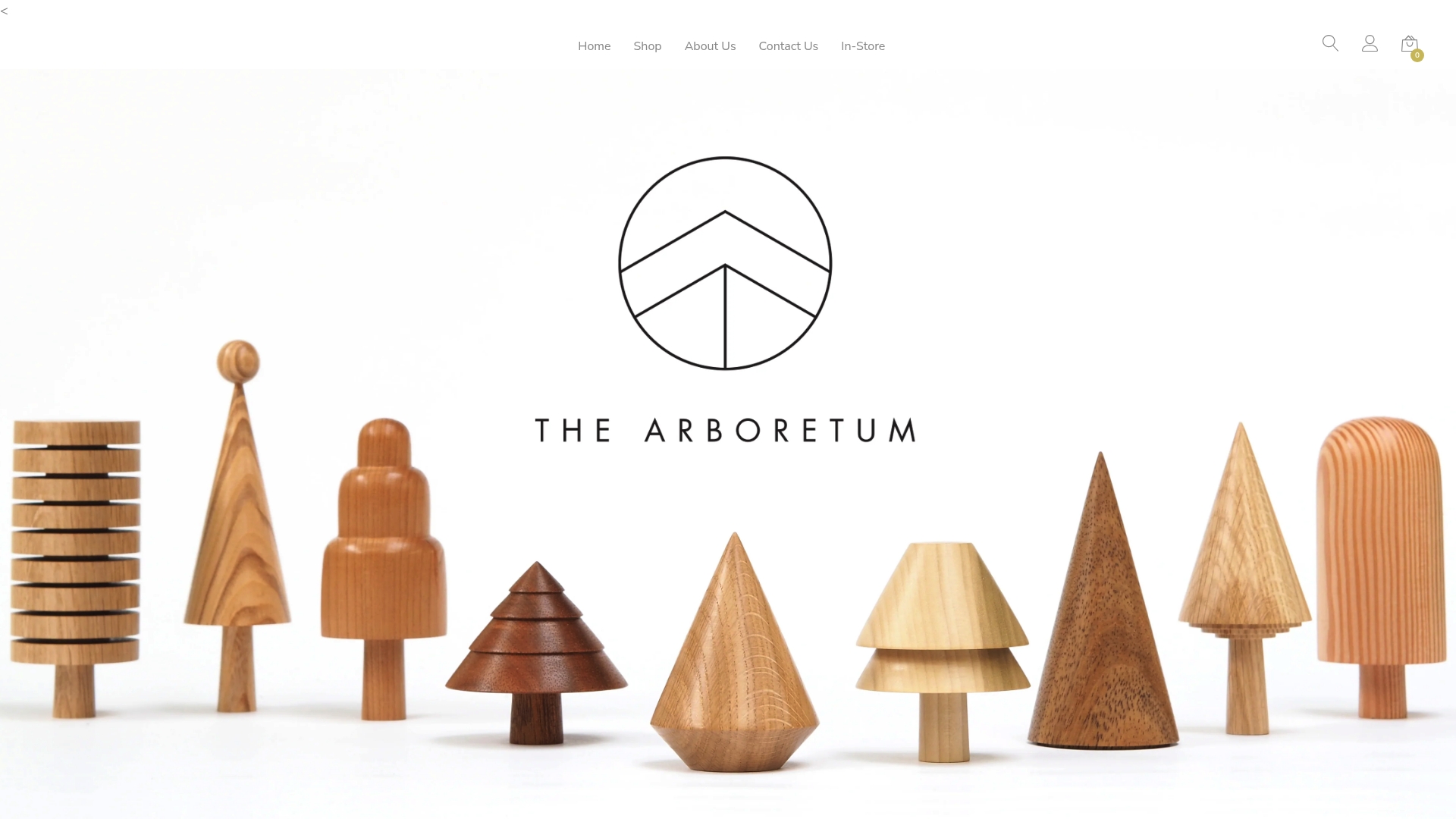
We make handmade wooden tree decorations from sustainably sourced hardwoods such as maple, walnut and oak, and we leave the natural knots and textures visible. That is the real appeal of walnut: no two trees look alike.
The Woodland sets are $126 and the Forest sets are $239. The Woodland range also comes in an Oak version at $126, a Droplets version at $126 and a Ninja Edition at $148. Child-friendly Woodland and Forest sets are priced the same as the standard ones. A Custom Single Tree is $28, and the Floating Shelf and Tree Candle are $40 each. Prices are as published on our site and may change, so check the collection page before ordering.
If you want to know where the wood comes from, our guide on how UK buyers verify walnut sustainability covers it.
Our view on walnut and cherry
We are woodworkers first, and we like cherry. But when we choose a wood for a tree that will stand on a shelf for years and be picked up by many hands, we reach for walnut, maple and oak.
Walnut gives us depth of colour and a grain that is never the same twice. We would rather show a knot than sand it out, because the knot is the proof that the piece grew rather than was manufactured. Maple gives us a light, clean partner to set against it, and oak adds another tone and texture.
We think of each tree as a small piece of art with a story, not a generic mass-produced decoration. That is why we offer single pieces, sets and custom designs, and why we make child-friendly options with dull points and food-safe finishes.
Our advice: choose the wood by the room and the person, not by the label. If you cannot decide, a mixed set of walnut and a lighter wood will always look good together.
Josh
Find your tree
If you have decided on walnut or a mix of woods, start with the Woodland sets, which include the Oak, Droplets, Ninja Edition and Child Friendly versions. For a bigger display, the Forest sets are our larger collection. If you want a particular design, the custom collection starts with a Custom Single Tree at $28.
Whatever you choose, look after it. Our guides to wooden ornament care and oiled wood care explain cleaning, storing and re-oiling.
FAQ
Is walnut harder than cherry?
Yes. A UK species chart lists approximate Janka hardness of 4,490 N for American walnut and 5,040 N for European walnut, against 4,230 N for American cherry. The difference is modest, and both are firm enough for furniture. Walnut resists small dents a little better.
Does cherry wood turn the same colour as walnut?
No, but they move towards each other. Cherry generally darkens with light, and walnut generally lightens, according to AHEC. Walnut stays the browner and darker of the two, while cherry stays warmer and redder.
Can I have walnut wood decor if I have a nut allergy?
Nut allergy reactions come from proteins in the nut, and allergists quoted by Food Allergy Canada and AAFA say that finished walnut wood is very low risk. Check that any oil used on the piece is not a nut oil. If your allergy is severe, ask your allergist before buying.
Is walnut sawdust harmful?
Hardwood dust of any kind can irritate skin and airways, and HSE says it can cause dermatitis and asthma. If you are sanding or cutting at home, use dust extraction, wear a suitable mask, and wash your hands before eating. A finished, sealed piece does not produce dust in normal use.
What wood goes well with walnut and cherry?
Walnut contrasts well with lighter hardwoods, and maple is a clean, light option. Cherry sits best alongside lighter woods or neutral surroundings. Look at samples in your own light, because both woods vary and change colour over time.
Sources
- A Guide to Sustainable American Hardwoods (AHEC, 2024)
- Wood Species Properties Chart
- How to Choose Hardwood for Woodworking
- Ask the allergist: tree nut allergy and walnut wood kitchen items
- AAFA: touching walnut wood with a nut allergy
- Occupational allergic contact dermatitis caused by wood dusts (PubMed)
- HSE WD4 woodworking guidance
- HSE EH40/2005 Workplace exposure limits
Follow Us On Social