

Maple is pale, creamy and fine-grained. Walnut is deep chocolate brown with a richer, more varied grain. Maple is also the harder of the two, while walnut is the easier to carve. Choose maple for a light, calm look and walnut for warmth and depth. If you can’t decide, use both, because they work very well together. Below we cover colour, grain, hardness, ageing, finishes, figured maple and how to put the two side by side in a UK home.
TL;DR
- Colour: maple runs from creamy white to pale beige, and walnut from light brown to dark chocolate, sometimes with purple or grey tones.
- Hardness: maple is around 1,450 lbf on the Janka scale and walnut around 1,010 lbf, so maple resists dents better and walnut is easier to work.
- Ageing: both change under light, and the finish you choose affects how much.
- Curly vs quilted maple: curly is a stripe-like figure, quilted is a rippled, blistered pattern, and plain maple has neither.
- Together: the pale and the dark contrast naturally, so a mix usually looks better than one wood used everywhere.
Table of Contents
- Colour and grain: the first thing you notice
- Is walnut harder than maple?
- Curly maple vs quilted maple vs plain maple
- How maple and walnut change over time
- Maple vs walnut colour once finished
- Do maple and walnut go together?
- Sourcing: what to look for with maple and walnut
- Which should you choose?
- Perspective
- Find your wood in a handmade tree
- FAQ
- Sources
Colour and grain: the first thing you notice
Put a piece of each on a shelf and the difference is obvious before you touch either.
Maple. American hard maple has creamy-white sapwood with a slight pinkish-brown tinge, and its heartwood can range from light to dark reddish brown, according to a UK timber importer’s species notes. The texture is close and fine, and the grain is generally straight. Another UK supplier says maple becomes warm, pale and almost white once finished. That smooth, quiet surface is why maple is so often linked with Scandinavian-style rooms.

Walnut. American black walnut runs from creamy brown to chocolate brown and is sometimes purplish. Its grain can be plain or highly figured. A UK furniture maker describes it as creamy white in the inner region through to dark chocolate on the outer wood, sometimes with a purple or red cast and darker streaks. The grain is generally straight but can turn wavy or curly.
Texture under your fingers
Walnut has a fine, tight grain with small, spread-out pores. Maple is even finer and closed-grained. A UK furniture studio notes that this gives maple a very smooth surface, well suited to painted or solid-colour finishes. In practice, walnut shows more visible character and maple shows more calm.
Quick comparison
| Maple | Walnut | |
|---|---|---|
| Typical colour | Creamy white to pale beige, sometimes golden or reddish | Light brown to deep chocolate, sometimes purple or grey tones |
| Grain | Fine, close, usually straight | Fine, tight, straight to wavy |
| Janka hardness | About 1,450 lbf | About 1,010 lbf |
| Feel and mood | Light, calm, contemporary | Warm, rich, characterful |
| Carving | Firmer, slower to cut | Easier, good for fine detail |
Is walnut harder than maple?
No. Maple is the harder wood. On the Janka scale, maple is usually around 1,450 lbf and walnut around 1,010 lbf, and a US comparison draws the same conclusion that maple is the more dent- and scratch-resistant. On those figures, maple is roughly 44% harder, as one comparison calculates.
For decor, hardness matters in two ways.
- Handling. A harder wood shrugs off knocks when a piece is lifted, packed away or moved each season. Walnut is still a durable wood, just a little more forgiving to the touch.
- Making. A UK importer rates maple 4/5 for hardness but 2/5 for machining, and walnut 3/5 for hardness and 4/5 for machining (species ratings). Walnut is easier to hand-tool and suits intricate shapes, while maple takes more patience to carve.
So a crisp, clean-edged shape suits maple well, and a more detailed, sculpted piece suits walnut. Neither is the weaker choice. They are strong in different ways.
Curly maple vs quilted maple vs plain maple
These terms confuse many buyers, because they describe figure, not species. All three are maple. The difference is how the grain behaves.
Plain maple is the straight, fine, even wood described above. It is the calm, pale baseline.
Curly maple, also called flamed or tiger maple, has undulating cell orientation. This creates stripe-like flames across the board and a shimmer that shifts as you move, an effect called chatoyancy. A tonewood guide for violin makers explains it clearly.
Quilted maple is a distortion of the grain that produces ripples and water-drop or blister-like patterns that look three-dimensional. The same guide says it is generally revealed by slab cutting and is rarer and harder to work than flamed maple.

There is also bird’s-eye maple, with small eye-like marks, which is used decoratively in veneers.
For decor, the choice comes down to how much movement you want. Plain maple lets the shape speak. Curly maple adds a linear shimmer. Quilted maple adds a pattern that looks almost like rippling water. If you love the visible character of walnut but want a pale piece, figured maple is the closest equivalent.
If you like wood with even more personality, our guide to spalted maple decor projects shows what the dark line patterns do to the pale background.
How maple and walnut change over time
Wood is not static, and the two species move in different directions.
- Maple tends to become slightly warmer and darker with light exposure, according to one buyer’s comparison. A US supplier says its lighter sapwood tends to darken under UV.
- Walnut can gradually lighten and warm. That same supplier notes the dark heartwood lightens with age under UV. A UK furniture specialist describes walnut as starting cool chocolate brown and developing a richer, warmer brown, while maple stays its lightest timber.
There is research behind this. A 2024 peer-reviewed study tested European maple and European walnut under accelerated indoor light. Both showed measurable colour change. After 72 hours, uncoated maple’s colour difference was 9.36 units and walnut’s was 6.20. The study also found clear coatings generally reduced maple’s change, while the type of coating affected walnut’s result.
The practical lesson is that neither wood will look identical in five years. A piece in a sunny window will shift faster than one on an interior shelf. If you enjoy the amber glow that develops, our piece on the walnut patina and its amber shift goes into the detail.
Maple vs walnut colour once finished
Finish changes how both woods read. Maple’s tight grain finishes very smoothly, though it can take stain unevenly and look blotchy, so it is often best left natural or given a clear finish. Walnut responds well to oil, which deepens the chocolate tones. The same source says pore-filling is only needed when you want a perfectly level surface.
A sheen also changes how the colour looks. A matt or satin surface reads softer and more natural, while gloss pushes depth and reflection. If you are weighing those options, this comparison of gloss versus satinwood finishes explains how each looks on woodwork.
One piece of advice applies to both species: judge colour from a finished sample, not a photo of raw timber. The same species can look different after finishing, and a screen only adds another variable. That is why we photograph our pieces in natural light.
Do maple and walnut go together?
Yes, and they are one of the easiest wood pairings to get right. They sit at opposite ends of the tonal range, so they read as deliberate contrast, not an accidental mismatch.
UK flooring guidance places maple among the light woods and walnut among the medium tones. Its advice is to match undertones rather than exact colours, mix wood shades for depth, and use rugs to separate tones that are too similar. Another UK specialist suggests pairing maple with hints of darker colours for contrast.
Some simple rules follow from that.
- Let one wood lead. Pick the dominant wood for the room, then use the other as an accent in a smaller quantity.
- Match undertones. Warm golden maple suits warm brown walnut. Cooler, greyer walnut sits better with the palest maple.
- Repeat each wood twice. A single walnut piece on a pale shelf looks like an accident. Two or three pieces spread across the room look planned.
- Vary the scale. A large pale surface with small dark objects, or the reverse, feels balanced.
Matching wood to a style
Maple’s pale, subtle grain suits Scandinavian, minimalist and modern interiors. Walnut’s warmth and depth suit statement pieces in settings from traditional to contemporary. It is also tied to mid-century interiors, so if that is your look, this guide to mid-century homeware is a good starting point for the rest of the room.
For more ideas on building a warm, textured scheme, see our wood grain decor ideas, and for what UK homes are choosing right now, our wooden decor trends round-up.
Sourcing: what to look for with maple and walnut
Both species are commonly imported to the UK, so sourcing is worth a few questions. One UK supplier says the hardwoods it uses come from sustainable forests where new trees are planted, and that its suppliers can provide FSC or PEFC certification. FSC chain of custody checks the timber at each stage of processing. Another UK supplier sources North American walnut and maple from North America and Central Europe, with certified timber available.
Two points help when you shop.
- Ask for certification where it matters. FSC or PEFC marks are the usual way to confirm responsible sourcing.
- Check the exact species. British sycamore is sometimes sold as an alternative to maple, but one supplier describes it as a softer, creamy-golden wood and distinguishes it from North American hard maple. A good seller names the species precisely.
For a longer look at how to verify walnut’s credentials, read our guide on how UK buyers verify walnut sustainability.
Which should you choose?
Use this as a quick decision guide.
- You want a light, calm, modern look: choose maple.
- You want warmth, depth and visible character: choose walnut.
- You want something that stands out against pale walls or floors: walnut gives the stronger contrast.
- You want a piece that handles knocks well: maple is the harder wood.
- You want fine, detailed carving: walnut is the easier wood to shape.
- You love pale wood but want drama: look at curly or quilted maple.
- You cannot choose: buy a mixed set and let the contrast do the work.
Perspective
We make our trees from sustainably sourced hardwoods such as maple, walnut and oak, and we have never thought of this as a contest. Each wood does something the other cannot.
Maple gives a tree a clean, pale outline that suits light, simple rooms. Walnut gives it depth, and its natural knots and textures show up beautifully against that dark background. We leave those knots and textures visible on purpose, because they are what make each tree one of a kind.
Our advice is to stop asking which wood is better and start asking where the piece will live. A pale shelf wants a dark tree. A dark mantel wants a light one. A set that mixes both is the easiest way to get the balance right, and it is how many of our customers build a collection over time.
We also make child-friendly options with dull points and food-safe finishes, so the choice of wood never has to limit who a piece is for.
Josh
Find your wood in a handmade tree
If you would like to see maple, walnut and oak in a finished piece, our handmade wooden trees are made to show the grain, knots and texture of each wood. Our Woodland sets start at $126 and our Forest sets at $239, with child-friendly versions available in both. A Custom Single Tree is $28 if you want one piece, and a Floating Shelf or Tree Candle is $40 each.
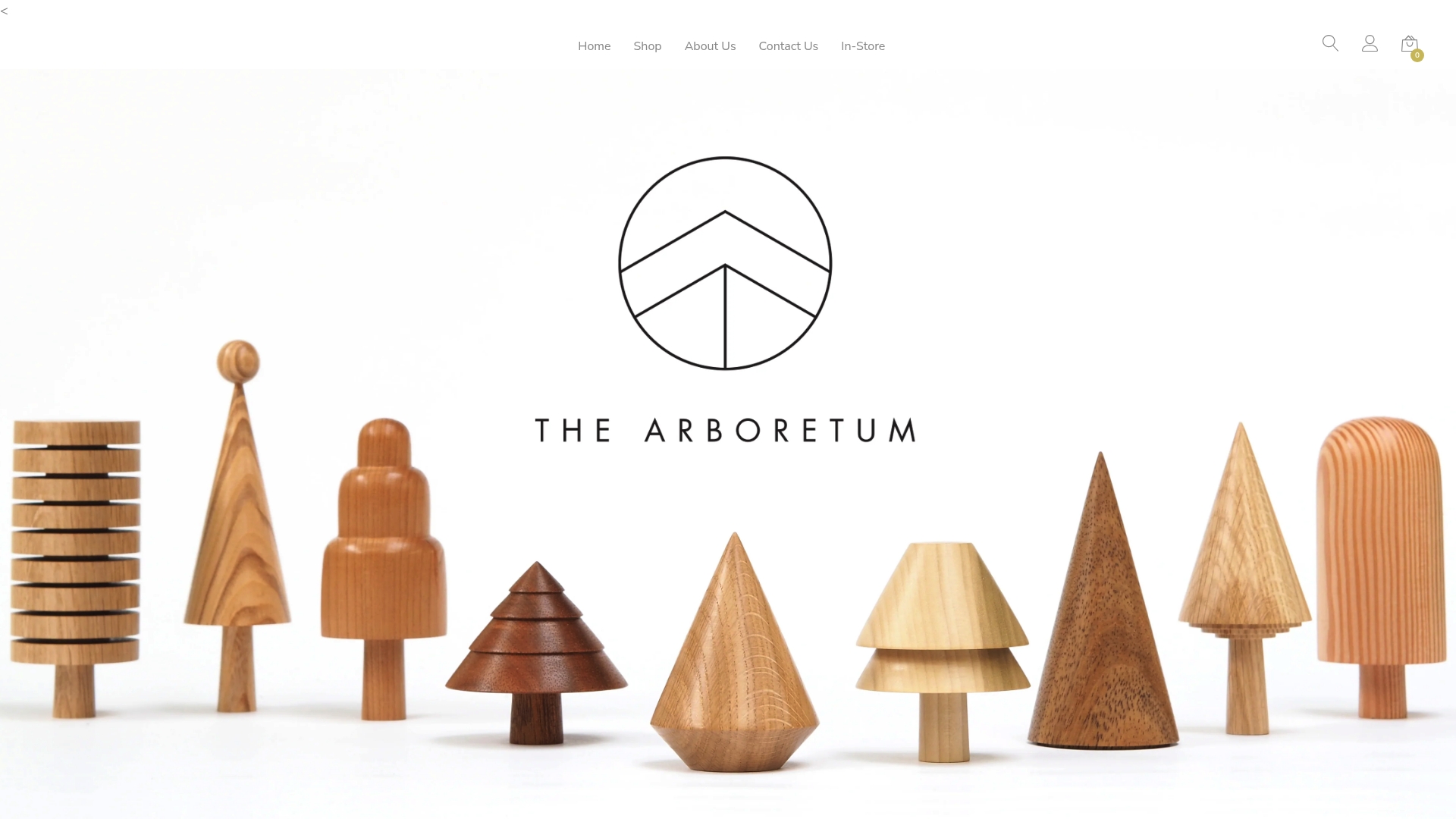
Browse the Woodland sets, the Forest sets or the custom designs to find the wood and the size that fit your space. They also make a thoughtful gift, because each tree carries its own story.
FAQ
Is walnut harder than maple?
No. Maple is harder, at about 1,450 lbf on the Janka scale against about 1,010 lbf for walnut. That makes maple more resistant to dents and scratches. Walnut is the easier of the two to carve and shape.
What is the difference between curly maple and plain maple?
Plain maple has a fine, straight, even grain with no pattern. Curly maple has a figure of stripe-like flames caused by undulating cell orientation, which shimmers as the light changes. Both are the same species, so the difference is in the figure, not the wood.
What is the difference between curly maple and quilted maple?
Curly maple shows linear, stripe-like flames across the surface. Quilted maple shows ripples or blister-like patterns that look three-dimensional, almost like water drops. Quilted figure is rarer and harder to work, so pieces made from it are often more expensive.
Do maple and walnut go together in decor?
Yes. Maple is among the lightest woods and walnut among the medium to dark tones, so they contrast cleanly. Let one wood lead, use the other as an accent, and repeat each at least twice around the room so the mix looks planned.
Does maple or walnut change colour over time?
Both do. Maple tends to warm and darken slightly in light, while walnut can gradually lighten and warm. A clear finish can reduce maple’s colour change, and a piece away from direct sun will change more slowly.
Sources
- Hardwood & Softwood Sawn Timber, UK importer species notes
- Treske’s Guide to Sustainable Hardwoods
- Types of hardwoods and their characteristics, Martelo and Mo
- How to specify timber for furniture and interior projects
- Maple vs walnut chopping board UK, Deer & Oak
- Maple vs Walnut Wood: Comparing Two Premium Hardwoods
- Maple vs Walnut: Hardness, Cost, and Which One Actually Wins
- Types of Figured Maple Used by Violin Makers
- Maple vs Walnut Wood: A Furniture Buyer’s Comparison
- North American Hardwoods, World Management International
- How to Style Our Timbers, Natural Bed Company
- Light-Induced Colour Changes in Wood Surfaces in Indoor Conditions, 2024 study
- What Colours and Tones Suit Your Wood Flooring Best
- Rough Sawn Joinery Timbers, Gilmour & Aitken
- Gloss vs Satinwood: Which Finish Suits Your Woodwork?
- Looking for Mid Century Homeware? 10 Things You Should Know
Follow Us On Social