

Earth tone Christmas decor works when you pick a small palette of browns, creams, moss greens and rust, repeat a few natural materials, and let one or two handmade pieces carry the character. Colour alone makes a scheme look flat. Texture, warm lighting and objects with visible grain are what make it feel like a woodland rather than a beige showroom. Wooden ornaments with natural knots do all three jobs at once, which is why we build our trees from maple, walnut and oak.
TL;DR
- Choose a palette of warm whites, oat, caramel, walnut brown, moss or sage green and a little rust or copper, then keep to it.
- Repeat two or three anchor materials (wood, linen, matt ceramic, dried foliage) so the room reads as calm and intentional.
- Light the scheme with warm white lights only; cool or multicoloured LEDs flatten earthy tones.
- Add one handmade, visibly natural piece per surface rather than many small items.
- With children in the house, choose pieces made for them, with dull points and food-safe finishes, and keep fragile or edible decor out of reach.
Table of Contents
- What earth tone actually means at Christmas
- Choosing a palette that holds together
- Repeat your materials, not just your colours
- Dressing the tree
- Lighting is what keeps it warm
- Earth tones beyond the tree
- Why handmade pieces make an earth tone scheme
- Earthy decor in a home with children
- Gift ideas for people who love earthy decor
- A simple earth tone plan for one weekend
- Perspective
- Where to find the pieces
- FAQ
- Sources
What earth tone actually means at Christmas
An earth tone scheme borrows its colours from woodland, fields and a winter hedgerow. Think bark and walnut browns, ochre and caramel, moss and sage greens, cream and stone, with rust, terracotta or burgundy as the occasional warm accent. It is the opposite of the red, green and gold most of us grew up with, but it is not minimalism for its own sake. The aim is warmth.
The pages that rank for this search keep returning to the same idea: the look comes from contrast and texture, not from matching colours exactly. A tree dressed entirely in one flat beige looks lifeless. A tree with pale linen, dark walnut, glossy glass and dried seed heads looks rich, even though every item sits in the same colour family.

Choosing a palette that holds together
Start with a base of three or four colours and add one accent. A reliable combination for a British home:
| Role | Colours | Where it appears |
|---|---|---|
| Base | Warm white, cream, oat | Ribbon, stockings, throws, paper stars |
| Wood tones | Maple, walnut, oak | Ornaments, trees, shelves, candle holders |
| Green | Moss, sage, deep pine | Real or artificial foliage, glass baubles |
| Accent | Rust, terracotta, copper | A few baubles, ribbon, a ceramic bowl |
Designers writing about natural schemes suggest similar groupings. An Atelier 44 Interiors piece on 2025 Christmas trends pairs natural wood and dried botanicals with muted beige, ivory and sage green, and suggests foraged greenery in place of plastic garlands, with wool throws, linen stockings and bouclé cushions for warmth. A colour scheme guide from These Four Walls describes an earthy scheme of browns and ochres with moss greens and rust reds, with bare branches and dried ferns bringing the outdoors in.
If you are already thinking about earthy tones for the rest of the house, it helps to see how the same ideas appear elsewhere, for example in kitchen cabinet colour trends. A Christmas scheme that echoes the colours already on your walls and units looks planned rather than added on.
For a deeper look at palettes, our guide to ornament colour palettes beyond matching goes through how to mix earthy tones without everything looking identical.
Repeat your materials, not just your colours
The most useful rule for a natural scheme is consistency. Choose two or three anchor materials and repeat them everywhere: wood, linen, matt ceramic, wool, dried foliage. When the materials feel aligned, a room reads as calm and intentional even with very little added. A practical trick is to gather everything you own onto a table before you start. Anything high-shine, plastic-looking or out of character stands out immediately, and you can leave it in the box.

Wood is the easiest anchor because it is already in your colour palette. Walnut brings a deep chocolate tone, maple gives a pale honey, and oak sits in between with a strong visible grain. Each piece differs from the next, which gives an earth tone tree the variation that factory-made baubles lack. Knots, ring patterns and colour shifts in the grain are what stop a neutral scheme looking sterile.
If you want a single focal object to build the scheme around, our piece on one artisan wooden piece that transforms neutral Christmas decor explains how one well-chosen item sets the tone for everything near it.
Dressing the tree
A few principles come up again and again in rustic tree styling:
- Leave space. Country Living UK’s rustic tree ideas advise leaving gaps between decorations so the tree’s own shape shows. Crowding hides the natural beauty you are trying to highlight.
- Add tactile toppers and trimmings. The same feature suggests a rattan topper and burlap bunting for texture.
- Choose handcrafted pieces in rich tones. Rust, copper and burgundy baubles from natural materials sit well against green, and decorations chosen to avoid passing trends can be reused year after year.
- Mix real foliage into an artificial tree. Wiring sprigs of spruce, ivy, rosemary and eucalyptus onto craft rope as mini swags adds depth and scent, according to Country Living’s contributors.
A simple layering order works well. Lights first, then ribbon in oat or cream, then your largest wooden pieces spaced evenly, then smaller textured items such as dried orange slices, wooden beads or paper stars to fill the gaps. Step back and squint: if one area is heavy, move something.
When you do not have room for a full tree
A tabletop tree is a good fit for flats and small rooms, and it suits wooden pieces particularly well because the grain is visible up close. Our guide to wooden tabletop Christmas tree styling for UK homes shows how to use 15 to 25 ornaments without crowding the branches.
Lighting is what keeps it warm
Earth tones fade quickly under the wrong light. Cool white or multicoloured LEDs turn browns grey and greens harsh. FreshKit’s woodland tree guide recommends warm white lights that mimic candlelight, with gold, copper or bronze metallics used sparingly.
Designer Rebecca Constable, in a House Beautiful UK home tour, says she wants a space to feel warm and inviting, nothing too cool or cold, and she puts real effort into lighting the tree properly. Copy that thinking: more strings of warm white lights than you think you need, wound deep into the branches as well as around the outside.
If you like the idea of candlelight, keep flames away from branches and decor. Our guide to candle-safe Scandi decor with handcrafted wood in UK homes covers sensible placement. Battery tealights give the same glow with no flame.
Earth tones beyond the tree
The scheme should carry through the house, not stop at the lounge. Ideas that suit the palette:
- Sideboard or kitchen island: the Woodland Trust suggests birch twigs in vases with fairy lights or mini baubles, a medium oak branch suspended over the dining table, and bundled foliage on doors. Use biodegradable twine rather than plastic ties.
- Dried orange garlands and pomanders: strings of dried oranges and clove-studded pomanders appear in the Rebecca Constable home tour, alongside clipped holly and eucalyptus garlands.
- Layered textiles: wool throws, linen stockings and bouclé cushions bring the colours down to sofa level.
- Shelves and mantels: a few wooden pieces with plenty of space around them look better than a crowded display.
When you take greenery down in January, it is worth knowing your local options for Christmas tree disposal so that real foliage does not end up as waste. For more ways to bring nature into the home, see our biophilic Christmas decorations guide.
Foraging with care
If you gather your own greenery, The Guardian’s sustainable-tree feature advises never to uproot plants or take from public green spaces without permission. Take clippings from your own garden or with the landowner’s say-so.
Why handmade pieces make an earth tone scheme
The difference between a catalogue scheme and a lived-in one is usually how many objects have a story. The same Guardian feature shows handmade and sustainably sourced pieces adding that character, from porcelain ornaments stamped with natural objects to untreated brass that develops a patina, and it encourages readers to think of ornaments as heirlooms to be passed down.
Wood fits that idea naturally. A walnut or maple tree does not fade, does not shed glitter and looks better with age. Because each piece is cut from a different board, no two have the same grain, so a collection built over several Christmases gains variety rather than repeating itself. That is the approach behind every piece we make: natural knots and textures left visible, sustainably sourced hardwoods and eco-friendly packaging. It also makes wooden trees a thoughtful gift for someone who already has a drawer full of baubles.
If you want the plastic-free route all the way through, our practical UK guide to plastic-free Christmas decorations covers what to swap and what to keep.
Earthy decor in a home with children
Natural does not have to mean fragile. Parents of young children tend to ask the same few things: can they touch it, can it be knocked off a shelf, and is the finish safe?
Our child-friendly versions of the Woodland and Forest sets are made with dull points and food-safe finishes, so they are designed to be handled. Display them at a height children can reach, and keep glass baubles, real candles and dried fruit garlands higher up. Our guide to ornament display ideas for UK homes with wooden pieces kids can reach shows how to arrange a scheme in two zones: a calm upper display and a low, touchable one.
A useful side effect is that children who are allowed to rearrange their own wooden trees tend to treat them as toys rather than decor. That fits an earthy scheme nicely, because a slightly shifted arrangement looks natural rather than messy.
Gift ideas for people who love earthy decor
A wooden tree is an easy gift for homeowners, collectors and anyone who likes things with a story. Because the pieces come as single trees, sets or custom designs, you can match the size of the gift to the person:
- A single custom tree for a colleague, neighbour or host.
- A Woodland set for a couple setting up their first home together.
- A Forest set for a collector or someone with a large mantel or tall shelf.
- A floating shelf or tree candle for someone who already has trees.
Owners can also build a collection over several years, adding a new piece each Christmas so the display grows with the family.
A simple earth tone plan for one weekend
- Gather and edit. Put all decorations on a table and remove anything shiny, neon or plastic-looking.
- Pick your palette. Three base colours and one accent, written down.
- Light first. Warm white strings on the tree, along shelves and in windows.
- Place your anchor pieces. Wooden ornaments and the largest textures go on first, evenly spaced.
- Layer the smaller details. Ribbon, dried orange slices, foliage, beads.
- Repeat elsewhere. One group on the sideboard, one on the table, a swag on the door.
- Edit again. Remove a third of what you added and see whether the room feels better.
Perspective
We make wooden trees because an earthy Christmas should feel like something grown, not something printed. When a scheme is built from beige baubles that all look identical, it ends up looking flat, however carefully the colours match. What brings it to life is grain: a walnut tree with a dark knot, a maple one with pale streaks, an oak piece with strong rings. None of them is copied from the next.
That is why we work with sustainably sourced maple, walnut and oak and leave natural knots and textures visible, and why we send them out in eco-friendly packaging. A few wooden trees on a mantel or shelf do the job that twenty mass-produced baubles cannot: they give the eye something to rest on and a story to tell when a guest asks where it came from.
If you take one thing from this article, let it be this: choose fewer, better pieces, repeat your materials, and light them warmly.
Josh
Where to find the pieces
Our Woodland sets cost $126, including the Child Friendly, Oak and Droplets versions, and the Ninja Edition is $148. The larger Forest set is $239. A Custom Single Tree is $28, and the Floating Shelf and Tree Candle are $40 each. Every piece is handmade from sustainably sourced hardwood, with natural knots and textures left visible.
Start with the Woodland sets if you are building a first earthy display, the Forest sets for a larger statement, or the custom designs if you want something made for a particular person or room.
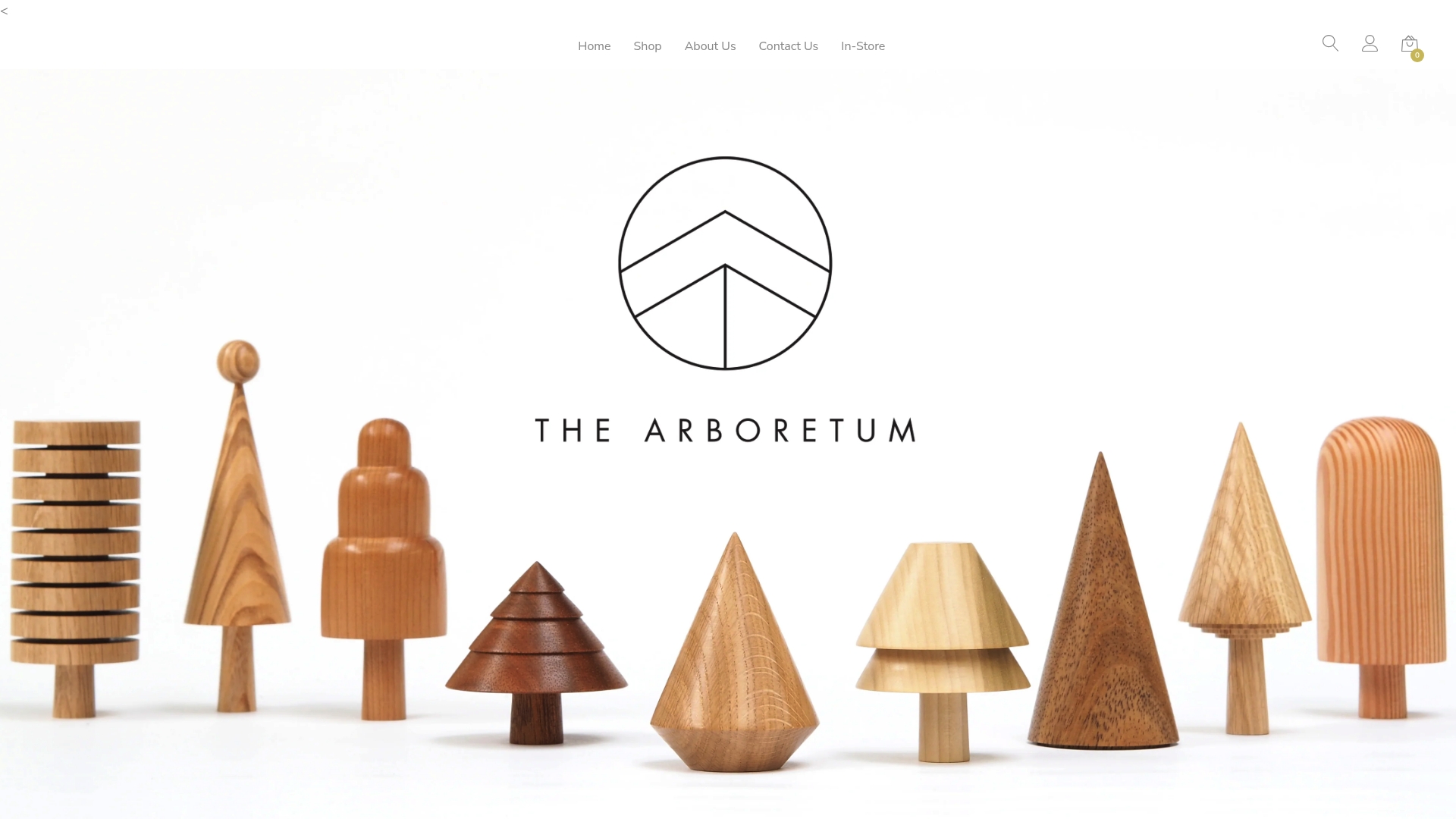
You can browse everything on thearboretum.co.uk.
FAQ
What colours count as earth tones for Christmas?
Browns, tans, caramel, cream, moss and sage green, rust, terracotta and burgundy all count. Most schemes use warm white or cream as the base, wood tones for warmth and one muted accent such as rust or copper. Bright red, silver and cool white are usually left out.
How do I stop an earth tone tree looking dull?
Add texture and warm light. Mix materials such as wood, linen, dried foliage and matt ceramic, leave space between decorations, and use warm white lights wound deep into the branches. A few darker pieces, such as walnut, give contrast against pale tones.
Are wooden ornaments suitable for homes with children?
Our child-friendly Woodland and Forest sets are made with dull points and food-safe finishes, so they are designed for small hands. Keep glass baubles, candles and edible garlands higher up and place the wooden pieces where children can reach them.
Can I use a real tree and an artificial one with the same scheme?
Yes. Earth tones suit both. On an artificial tree, wiring in real spruce, ivy, rosemary or eucalyptus adds scent and texture, and wooden ornaments look the same on either type of tree.
Sources
- Atelier 44 Interiors: Christmas Decorating Trends 2025
- These Four Walls: Three nature-inspired colour schemes for Christmas
- Country Living UK: How To Decorate Your Christmas Tree, 12 Rustic Ideas
- FreshKit: Woodland Christmas Tree Decorations
- House Beautiful UK: Rebecca Constable’s Victorian home tour
- Woodland Trust: 7 Ideas for Sustainable and Foraged Winter Decor
- The Guardian: Dreaming of a green Christmas
- Kitchen cabinet colour trends
- Christmas tree disposal options
Follow Us On Social